


A drain that clears and then slows again is rarely a random annoyance. In Surprise, Arizona, recurring kitchen, bathroom, and sewer-line clogs often mean that material remains in the pipe or that the line has a condition that simple clearing cannot resolve. Homeowners considering hydro jetting services in Surprise AZ should first understand what is causing the restriction and whether the pipe is suitable for thorough cleaning.
One quick clearing can create a narrow opening through a blockage, allowing water to move for a while. That does not always remove grease, soap residue, scale, roots, or debris attached to the pipe walls. When the same symptoms return within days or weeks, the better question is not simply how to clear the drain again, but why it is clogging repeatedly.
Why a Drain Works Briefly, Then Clogs Again
Think of a kitchen drain with a thick coating of cooled cooking grease. A snake may punch a channel through the center, and the sink may drain normally for a short time. As more grease and food particles pass through, that small channel can close again. The same pattern occurs when hair and soap collect in a bathroom branch line or when roots enter a sewer pipe through a damaged joint.
Repeated clogs deserve a closer look because the visible symptom does not identify the underlying cause. Clearing the obstruction may be enough for a localized blockage, but recurring trouble may call for a more complete cleaning or an inspection of the line.
Common Materials That Build Up Inside Drain Lines
Kitchen sinks frequently collect fats, oils, grease, food scraps, and coffee grounds. Even liquids that seem harmless when warm can cool and adhere to pipe walls. The City of Surprise identifies fats, oils, and grease as a wastewater concern, making it wise to let cooking grease cool in a container before putting it in the trash or using an approved disposal option.
Bathroom drains commonly collect hair, soap residue, toothpaste, and lint. Mineral scale and sediment can also narrow portions of a pipe over time. Toilets and sewer lines can be affected by wipes, paper towels, cotton products, and other materials that do not break apart like toilet paper. Outside the home, tree roots may enter through cracks, offsets, or loose connections and catch additional debris.
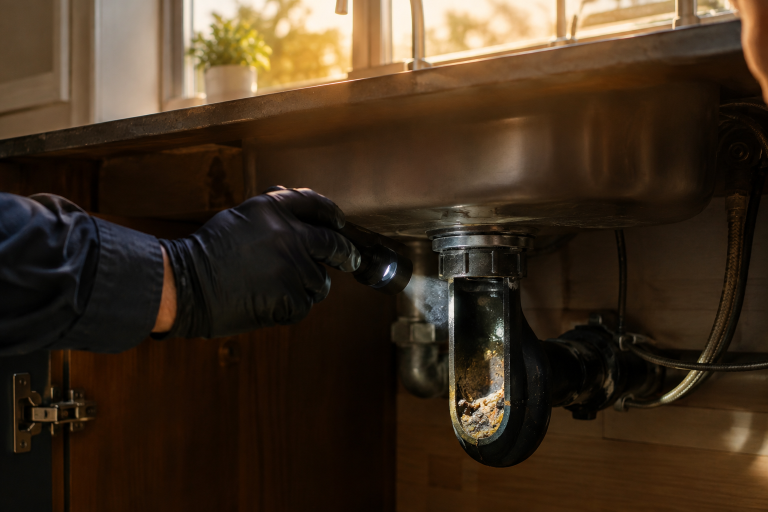
Warning Signs of a Larger Drain Problem
- One slow fixture: The blockage may be close to that sink, tub, or shower.
- Several slow fixtures: A shared drain or main sewer line may be restricted.
- Gurgling sounds: Air may be moving around a partial blockage or venting issue.
- Persistent odors: Waste buildup, stagnant water, or a dry trap may be involved.
- Water moving between fixtures: Water rising in a tub when a toilet flushes can signal a main-line concern.
- Fast return of symptoms: Another quick clearing may not address the full problem.
Choosing the Right Clearing Method
The right method depends on the location of the blockage, the material involved, and the line’s condition. A simple comparison can help set expectations.
| Method | Best For | Limitation |
|---|---|---|
| Plunging | Small, nearby clogs | Does not remove wall buildup |
| Drain snaking | Localized obstructions | May leave grease or scale behind |
| High-pressure cleaning | Buildup in suitable pipes | Pipe condition must be checked first |
| Pipe repair | Cracks, collapse, offsets, roots | Does not replace routine maintenance |
Why Pipe Condition Matters Before Cleaning
Cleaning removes material inside a line. It does not repair a collapsed section, a separated joint, severe corrosion, a poor slope, or a crack that allows roots to return. Older or damaged pipes may need a different approach than structurally sound pipes. Reviewing pipe condition before major cleaning helps avoid guesswork and makes it easier to match the solution to the actual issue.
What a Drain Camera Can Reveal
A camera inspection gives a view inside the line through an accessible opening. A CCTV drain camera inspection can help identify grease coatings, roots, foreign objects, offset joints, cracks, low spots that collect waste, or collapsed pipe sections. It can also help confirm whether cleaning restored the pipe’s usable flow path.
A Practical Checklist for Recurring Clogs
- Track the symptoms. Note which fixtures are affected, when the issue occurs, and how soon it returns.
- Check accessible areas. Clean sink strainers and remove visible hair or debris from stoppers.
- Avoid repeated chemical cleaner use. Chemical products may create handling hazards and cannot repair damaged pipe.
- Watch for whole-home signs. Multiple slow drains, gurgling toilets, or wastewater backups need prompt attention.
- Ask about inspection. A camera can help determine whether buildup or structural damage is present.
- Match the work to the finding. The answer may be cleaning, repair, replacement, or a maintenance plan.
- Confirm the result. Test drainage and ask which preventive steps are appropriate for the line’s condition.
Habits That Help Prevent Repeat Clogs
- Scrape plates and pans into the trash before washing them.
- Keep cooking grease out of sinks and garbage disposals.
- Use strainers in kitchen and bathroom sinks.
- Flush only toilet paper and human waste.
- Throw wipes, paper towels, cotton products, and dental floss in the trash.
- Clean accessible drain covers and strainers regularly.
- Address early slow-drain symptoms before a full backup occurs.
Common Questions About Recurring Drain Clogs
Can a plunger fix a recurring clog?
A plunger can help dislodge some nearby blockages, especially at a toilet or sink. If the clog repeatedly returns, however, buildup or a deeper line issue may still be present.
Is high-pressure water cleaning safe for every pipe?
No. Pipe material, age, access, and visible damage should be considered before selecting a cleaning method. A line with significant structural damage may need repair instead.
Why does a drain smell after it has been cleared?
Odors can come from remaining buildup, stagnant material farther down the line, or a dry plumbing trap. A continuing sewer-like odor should be evaluated rather than masked.
How can a homeowner tell whether the main line is involved?
Several affected fixtures, toilet gurgling, wastewater backing into a tub or shower, and water movement between fixtures are all reasons to suspect a larger shared-line problem.
When to Seek Professional Help
Seek help promptly when wastewater backs up into a sink, tub, shower, or floor drain. It is also time to request an inspection when the same clog returns soon after being cleared, several fixtures slow down at once, or roots and pipe damage are suspected. In Surprise, finding the cause behind a repeat clog is often more valuable than clearing the symptom one more time.

