


A successful EV charging site begins with how people actually travel, park, and recharge. Property owners, developers, fleet managers, and public agencies should evaluate driver behavior before choosing equipment, because even powerful DC fast chargers can disappoint when a site is difficult to reach, poorly designed, or unreliable.
The strongest projects make charging feel simple. Drivers should be able to enter safely, find an open space, connect without struggling with cable reach, pay clearly, use nearby amenities if needed, and leave without having to navigate a confusing parking lot.
Why Site Planning Matters
Charging demand differs sharply by location. A highway stop serves drivers who need to continue a trip quickly, while a retail center may serve people who plan to shop for 30 to 90 minutes. Workplaces, apartments, tourist destinations, and fleet depots all have different parking patterns, peak hours, and expectations. The planning considerations for EV charging infrastructure reflect this reality by emphasizing location, accessibility, permitting, and local needs rather than a one-size-fits-all approach.
Start With Driver Behavior
Ask who will charge, how long they will stay, and when they will arrive. A grocery customer may value a convenient moderate-speed session, while a rideshare driver may prioritize rapid turnover. Fleet operators may need multiple vehicles charging at once before a morning shift. Review busiest-hour demand, weekend traffic, seasonal travel, nearby EV ownership, and whether vehicles can enter from both directions without an inconvenient detour.
Useful Questions Before Selecting Equipment
- How many charging sessions are likely during the busiest hour?
- Will drivers park for minutes, hours, or overnight?
- Do several vehicles arrive at the same time?
- What services will drivers need while waiting?
Choose the Right Location
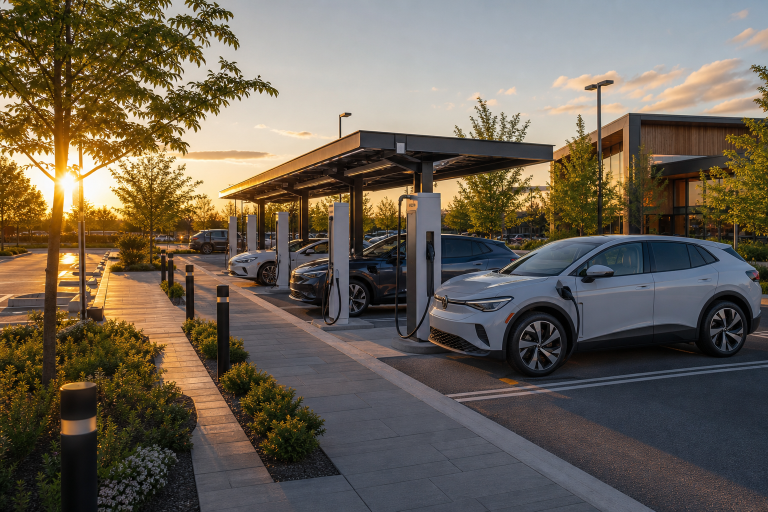
Visibility matters, but convenience matters more. Strong locations offer straightforward entry and exit, reliable cellular connectivity, secure lighting, nearby restrooms or retail, and sufficient space for electrical equipment. Review drainage, flood exposure, snow removal, shade, landscaping, and parking congestion as well. A charger hidden behind a building or blocked by busy parking traffic may be underused even if it is close to a major road.
Match Charging Speed to the Site
More power is not automatically better. Higher-output equipment can require larger electrical upgrades and may not fit the typical visit length. Consider these practical matches:
- Highway travel centers: Prioritize quick turnaround, multiple stalls, simple circulation, and amenities.
- Retail centers: Match charging to shopping time and avoid taking scarce high-demand parking spaces.
- Workplaces: Focus on longer parking periods, employee access, and manageable daily load.
- Fleet depots: Plan around route schedules, vehicle turnaround, and operational uptime.
- Urban garages: Account for tight spaces, traffic flow, payment rules, and safe pedestrian access.
Actual charging speed also depends on the vehicle, battery temperature, battery state of charge, and the vehicle’s charging limits.
Check Power and Utility Needs
Complete an electrical assessment before ordering equipment. Review existing service capacity, future load, transformer needs, switchgear placement, trenching routes, permits, inspections, zoning, and utility lead times. Utilities may require upgrades that affect both budget and schedule, so early coordination is critical. Leave room for load management, additional cabinets, and conduit routes even when the first phase is small.
Design for Access and Safety
Physical details shape the charging experience. Provide clear entry and exit paths, readable signs, adequate lighting, protected equipment, drainage to prevent standing water, and pedestrian routes to nearby services. Charging spaces should accommodate vehicles of different sizes and parking orientations. Drivers should not need to block a travel lane, stretch cables across traffic, or reverse repeatedly to reach a connector. Review the site at night and during poor weather before finalizing the layout.
Plan for Vehicle Compatibility
Connector planning should account for the vehicles expected today and those likely to arrive later. Confirm cable length, parking orientation, labeling, adapter policies, and session instructions. Plain-language instructions help first-time users, while accurate connector labels reduce failed attempts and unnecessary support calls. A high-power station cannot make a vehicle accept more power than its battery system allows.
Control Costs and Demand Charges
Project costs extend beyond the charger itself. Budget for equipment, civil work, concrete, trenching, utility upgrades, permits, networking, payment processing, insurance, maintenance, and customer support. Energy charges are only part of the operating picture. In some cases, peak demand can significantly affect costs. For fleets and high-use sites, smart charge management can help coordinate charging around vehicle schedules, building load, and electricity pricing.
Build a Reliable User Experience
Reliability earns repeat visits. Drivers need accurate station status, readable screens, clear pricing, simple payment choices, responsive support, and automatic receipts. Establish inspection routines for cables, screens, pavement markings, lighting, and cleanliness. Track uptime, completed sessions, failed starts, support requests, and repair response times. Charger count alone does not measure whether a site is serving drivers well.
Create a Phased Growth Plan
A phased build can reduce risk when utilization is uncertain. Start with a practical number of stalls, monitor demand by hour and day, then adjust pricing, signage, parking rules, and maintenance procedures. Reserve electrical room, conduit, transformer space, and parking capacity for future expansion. Later phases may add stalls, increase available power, or incorporate storage and fleet-specific controls when actual demand supports the investment.
Common Planning Mistakes
- Choosing a site based only on visibility.
- Ordering hardware before confirming utility capacity.
- Ignoring cable reach and vehicle parking patterns.
- Overlooking lighting, drainage, snow removal, and accessible routes.
- Providing unclear pricing or too few payment options.
- Failing to set maintenance and support expectations.
- Planning only for current demand without preserving room to grow.
Final Checklist
- Define the primary driver groups and their dwell times.
- Review nearby traffic, parking availability, and charging gaps.
- Match the charger’s power to the site’s actual use case.
- Confirm utility capacity, permits, accessibility, and zoning requirements.
- Plan signs, lighting, cable reach, safety, payment, and support.
- Estimate operating costs, including possible demand charges.
- Track performance after launch and preserve capacity for expansion.
Conclusion
A useful EV fast-charging site starts with people, not hardware. The best projects fit driver routes, available time, vehicle needs, and expectations for safety and reliability. By studying demand, checking power early, designing for easy access, and using operating data to guide future phases, site hosts can create charging locations that work well from opening day through long-term growth.

