


An engagement ring feels most successful when its diamond shape, setting, and proportions support the same visual idea. A soft oval on a delicate band creates a different impression than an emerald-cut stone in a structured bezel, even when the diamonds have similar carat weights. For shoppers who love added brilliance and presence, affordable lab-grown halo engagement rings can be a useful starting point for seeing how a surrounding frame of accent stones changes a center diamond’s scale. The goal is not to find one universally “best” ring. It is to choose a design that suits the wearer’s hand, daily routine, budget, and personal style. Diamond shape refers to the outline seen from above, while cut style refers to the facet pattern that affects how light moves through the stone.
Shape and Setting: What Each One Does
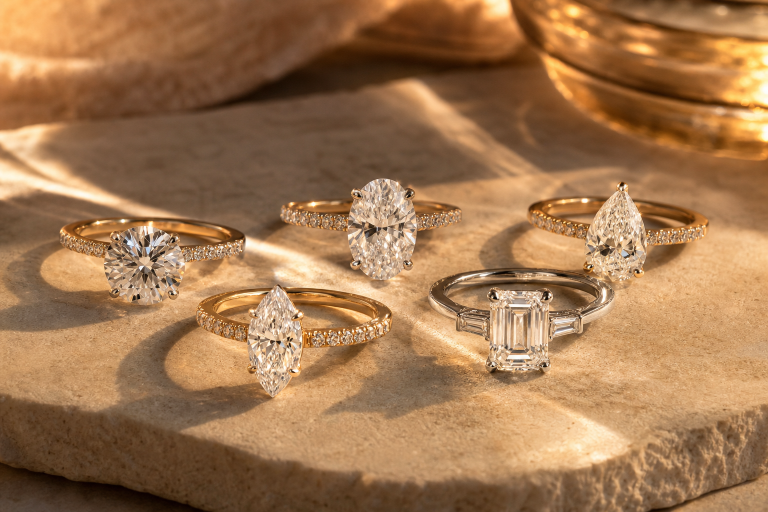
Shape establishes the ring’s personality. A round diamond looks balanced and familiar, an oval appears graceful, and a marquise makes a bolder statement. The setting is the metal structure that secures the diamond. It also influences how high the stone sits, how much of its edge is visible, and how likely the ring is to catch on clothing. For example, a round diamond in a simple four-prong solitaire reads clean and classic. Put that same diamond in a halo with pavé accents, and it becomes more elaborate and visually larger. A setting cannot change the diamond’s actual size, but it can significantly change its presence.
How Diamond Shape Changes the Ring’s Look
Round, Oval, and Other Elongated Shapes
Round diamonds have an even, symmetrical outline and work well in nearly every setting style. They are especially adaptable for solitaires, halos, and three-stone designs. Ovals, pears, marquises, and elongated rectangular shapes provide more length across the finger. This can create a slenderizing effect and make the diamond appear larger from the top view. Length-to-width ratio matters with elongated diamonds. A wider oval looks softly rounded, while a narrow oval feels more dramatic. Pear and marquise shapes have pointed ends that should be protected with V-prongs or a bezel-like design to reduce the risk of chipping.
Emerald, Cushion, and Princess Shapes
Emerald and Asscher cuts use broad, step-like facets that produce calm flashes instead of a busy sparkle pattern. Their open facets make clarity and symmetry easier to notice. Cushion diamonds bring rounded corners and a softer, often vintage-inspired mood. Princess cuts look crisp, geometric, and modern, but their corners need secure protection.
Common Setting Types and Their Effects
Prong and Bezel Settings
Prong settings hold the diamond with small metal supports, leaving much of the stone exposed. Four prongs create a lighter look, while six prongs can offer added security and make a round diamond appear more rounded. Bezel settings wrap the diamond’s edge in metal. They create a sleek silhouette, offer strong protection, and are often practical for activewear, although more metal may encircle the diamond’s perimeter.
Halo, Pavé, Channel, and Three-Stone Designs
A halo surrounds the center stone with smaller diamonds, increasing sparkle and apparent size. Pavé-set accent diamonds along the band create a continuous shimmer, while channel-set stones sit between metal walls for a cleaner, smoother finish. Three-stone rings frame the center diamond with side stones, making the design feel broader and more substantial. Cathedral settings raise the center stone for drama, while low-profile designs sit closer to the finger for easier everyday wear.
Why Proportion Matters
Proportion is what makes a ring look intentional rather than mismatched. A very thin band can make a center diamond appear prominent, but an oversized stone on an extremely delicate shank may feel visually or structurally unbalanced. A wider band creates a stronger, more grounded appearance, though it can make a modest center stone look smaller by comparison.
- Delicate proportions: Slim band, minimal metal, and emphasis on the center stone.
- Medium proportions: A balanced band width that works for many diamond sizes and settings.
- Substantial proportions: Wider band, larger side details, or a bolder center stone for noticeable finger coverage.
Also consider the future wedding band. A low-set engagement ring may need a contoured band to sit flush, while a raised setting often allows a straight band beneath the center stone.
Matching a Ring to Daily Life
A beautiful ring should work with real habits. People who lift weights, garden, work in healthcare, care for children, or use tools regularly may prefer a lower profile, smooth edges, and protective settings. A high-set solitaire can be striking, but it may snag more easily or receive more frequent impacts. Those with office-based routines may find more detailed halos, pavé bands, or cathedral settings easy to wear. Minimalist preferences often suit a bezel, plain band, or refined solitaire. Statement-focused styles may favor contrasting metals, prominent side stones, or a larger halo. Before buying, review the seller’s maintenance, resizing, repair, and return terms, along with practical consumer guidance on buying diamonds and gemstones.
Balancing Appearance and Budget
Carat weight measures a diamond’s weight, not its visible size. An elongated shape may cover more of the finger than a round stone of the same weight, while a halo can add visual scale without increasing the center diamond’s carat weight. Cut quality, proportions, color, clarity, metal choice, and setting complexity all affect the final price. Set a complete budget before choosing individual features. Then prioritize what matters most, whether that is exceptional sparkle, a low-profile setting, a larger face-up look, or intricate detailing. Comparing complete rings rather than isolated specifications helps prevent costly choices that do not improve the overall design.
A Simple Ring-Selection Checklist
- Choose a general mood, such as classic, modern, soft, bold, or vintage-inspired.
- Try multiple diamond shapes on the hand rather than judging only from photos.
- Decide whether sparkle, protection, height, or simplicity is the highest priority.
- Check that the band width complements the center diamond.
- View the ring from the top, side, and three-quarter angles.
- Ask how the engagement ring will pair with a wedding band.
- Review the diamond report or quality assessment and care requirements.
Common Questions About Ring Design
Does Diamond Shape Matter More Than Carat Weight?
Neither factor matters more in every situation. Shape determines outline, style, and finger coverage, while carat weight measures mass. A well-proportioned oval may look larger than a round diamond of the same weight, but personal preference should lead the decision.
Which Setting Makes a Diamond Look Larger?
Halos, slim bands, and carefully scaled prongs can increase visual presence. Still, a setting works best when it supports a well-chosen center stone rather than compensating for poor proportions.
Are Higher Settings Harder to Wear?
They can be. Higher settings offer more side visibility and drama, but they are more likely to catch on fabric or encounter impact. Lower settings are often easier for frequent daily wear.
Should the Engagement Ring Match the Wedding Band?
Matching metal and band width creates a polished set, but contrast can be equally intentional. The most important consideration is whether the rings sit comfortably together and reflect the wearer’s style.
Final Thoughts
Diamond shape sets the tone, the setting controls protection and presentation, and proportion brings the entire ring into balance. Looking at all three together makes it easier to choose a ring that feels beautiful from every angle, comfortable for everyday life, and personal enough to enjoy for years to come. A thoughtful choice considers not only the diamond’s appearance but also how the ring fits your lifestyle, hand shape, daily activities, and personal taste. The right combination of shape, setting, and proportion can enhance sparkle, improve durability, and create a design that feels timeless rather than temporary. By taking time to compare these elements carefully, buyers can select a ring that reflects their style while remaining practical and meaningful for everyday wear.

