


A bicycle crash can turn an ordinary commute, errand, or ride through New York City into a stressful and confusing event. In the first hours, focus on safety and health rather than trying to decide who was at fault. If injuries, expenses, or insurance questions become complicated, speaking with one of the best New York City bicycle accident lawyers may help you understand the options available in your situation.
This checklist is designed to help cyclists protect themselves after a collision involving a car, truck, pedestrian, another cyclist, dangerous road conditions, or a blocked bike lane. Every crash is different, but prompt medical care, accurate documentation, and organized records can make the days that follow more manageable.
What to Do in the First Few Minutes
Get out of the path of traffic if you can do so safely, but do not force yourself to move if you may have a serious injury. Call 911 when anyone has severe pain, bleeding, confusion, trouble breathing, loss of consciousness, or cannot safely stand. Avoid arguing with the driver or other people at the scene. Instead, exchange basic contact and insurance information when possible, and ask a bystander to watch your bicycle or belongings if you need medical attention.
- Note the time, cross streets, travel direction, and nearby landmarks.
- Write down the vehicle’s plate number, make, model, and color.
- Do not leave the scene unless emergency care requires it.
- Do not chase a driver who leaves the scene.
Why Medical Care Comes First
Adrenaline can hide pain after an impact. A cyclist may initially feel fine and later develop symptoms from a concussion, whiplash, soft-tissue injury, or internal injury. Seek prompt evaluation when you have a headache, dizziness, nausea, confusion, neck or back pain, numbness, weakness, chest pain, abdominal pain, increasing swelling, or trouble walking. Follow the treatment plan you receive, and save visit summaries, test results, prescriptions, receipts, and medical bills.
How to Preserve Evidence at the Scene
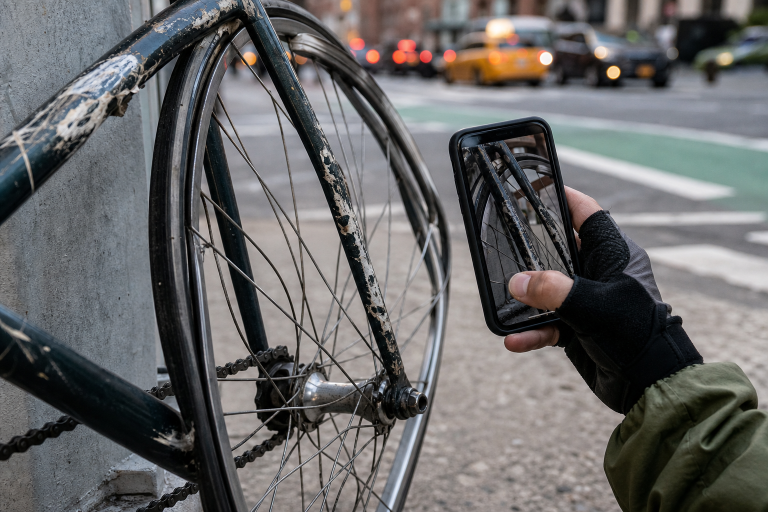
Small details can become important later because streets change quickly. If it is safe, use your phone to take wide photographs of the overall location and close-ups of your bicycle, vehicle damage, helmet, clothing, injuries, traffic lights, lane markings, signs, potholes, debris, construction barriers, and weather conditions. Save any helmet-camera footage immediately in more than one location. Keep damaged gear and bicycle parts, and do not repair or discard the bicycle before its condition has been documented.
Witnesses and Police Reports
Ask witnesses for their names, phone numbers, and email addresses. They do not need to decide who caused the crash. A neutral account of what they saw, heard, or noticed can still be useful. When officers respond, request the report number and review the details once the report is available. The city explains how people can request motor vehicle collision reports, including online retrieval options and precinct procedures. If a report lists the wrong street, vehicle, direction of travel, or injury information, keep notes about the error and ask how it may be addressed.
Common Causes of NYC Bicycle Crashes
Dooring Crashes
A dooring crash occurs when a driver or passenger opens a parked vehicle’s door into a cyclist’s path. Photograph the vehicle, the open door, the bike lane, and where the bicycle came to rest.
Unsafe Turns and Intersections
Right-turn and left-turn crashes often happen when a motorist fails to notice a cyclist traveling alongside the vehicle or proceeding through an intersection. Large vehicles can create serious blind spots, especially near turns.
Blocked Lanes, Road Defects, and Visibility Problems
Delivery trucks, parked cars, trash containers, loose gravel, potholes, poor lighting, and construction work can force riders into danger. The city’s bike safety guidance emphasizes visibility, awareness around larger vehicles, and cautious riding at intersections. After a crash involving a hazardous condition, record the exact location and take photos before the condition is removed or repaired.
Speaking With an Insurer
An insurance adjuster may request a recorded statement, photographs, medical authorizations, or a fast settlement. Be polite and truthful, but do not guess about speed, fault, or the full extent of an injury before you know it. Keep a written log of calls, emails, claim numbers, requested documents, and payments. Do not minimize pain just to sound cooperative, sign a release without understanding it, or post crash details and recovery updates on social media.
Injuries, Expenses, and Recovery
Recovery can involve much more than an emergency room visit. Keep records of emergency care, doctor visits, imaging, medication, therapy, transportation to appointments, bicycle repairs or replacement, damaged gear, missed wages, and help needed with household tasks. Pain can also affect sleep, mobility, mood, confidence, and relationships. Those effects deserve attention as part of recovery, even when there is no broken bone.
Time-Sensitive Details
Deadlines may depend on the people, vehicles, insurers, and public agencies involved. Crashes involving a city-owned vehicle, public property, or a roadway condition can involve special notice requirements and shorter timelines. Do not rely on a general deadline found online. Create a personal timeline that lists the crash date, treatment appointments, work absences, insurance contacts, repair estimates, and follow-up care.
Mistakes That Can Make a Claim Harder
- Waiting too long to seek medical care.
- Leaving without collecting basic information.
- Failing to preserve photographs, video, clothing, or damaged equipment.
- Guessing when describing how the crash happened.
- Repairing or throwing away the bicycle too early.
- Accepting a quick payment without reviewing the terms.
- Assuming a minor symptom cannot develop into a larger problem.
Common Questions From Injured Cyclists
Should I report a crash if the injury seems minor?
Reporting can create a useful record, and symptoms may become more noticeable later. This is especially true after head, neck, or back impacts.
What if the driver leaves the scene?
Move to safety, call 911, write down everything you remember about the vehicle, and look for nearby witnesses or cameras. Do not place yourself in further danger by pursuing the vehicle.
What if I may have made a mistake?
Be honest, preserve evidence, and avoid making assumptions. A collision can involve multiple contributing factors that are not obvious in the first moments after impact.
What if I were riding a rental or shared bike?
Save trip receipts, app records, rental details, damage notices, and all messages exchanged with the company.
Final Takeaway
After a New York City bicycle crash, protect your immediate safety, get medical care, document the facts, preserve evidence, and track expenses. Clear records cannot undo the crash, but they can help you make informed decisions while you focus on recovery.

