


An accident can create immediate medical, financial, and practical concerns. Whether the injury resulted from a vehicle collision, a fall, a workplace incident, or another event, early choices may affect both recovery and the ability to document what happened. Understanding the benefits of hiring a personal injury lawyer can also help when the claim becomes too complicated to manage alone.
This guide offers general information for people dealing with an injury claim in 2026. It is not a substitute for medical or legal advice. The next right step depends on the injury, available evidence, insurance coverage, and the law of the jurisdiction where the incident occurred.
Why the First Few Days Matter
The first days after an accident may feel rushed, painful, and confusing. Emergency care should always come first. Once immediate safety needs are addressed, create a basic record while memories are fresh. Notes do not have to be polished. They should be truthful, dated, and limited to what you remember.
- Get emergency help when needed.
- Report the incident to the appropriate authority, employer, or property owner.
- Write down what happened, including the time, place, and people involved.
- Save witness names and contact details.
- Keep letters, emails, photos, and claim numbers together.
Build a Clear Evidence File
Evidence helps connect the incident, the injury, and the losses that followed. A useful file usually consists of many small details, not one dramatic document. Save original files when possible, back up digital photos, and avoid editing images or messages.
Useful Items to Save
- Photos or videos of the scene, injuries, and damaged property
- Police, workplace, or incident reports
- Medical records, treatment instructions, and prescription receipts
- Pay stubs and employer records showing missed work
- Messages with insurers, witnesses, employers, or property owners
- A personal journal describing pain, sleep problems, and activity limits
In vehicle cases, crash investigation data illustrates why scene conditions, vehicle damage, witness accounts, and medical information can all matter when reconstructing an event.
Track Medical Care and Daily Changes
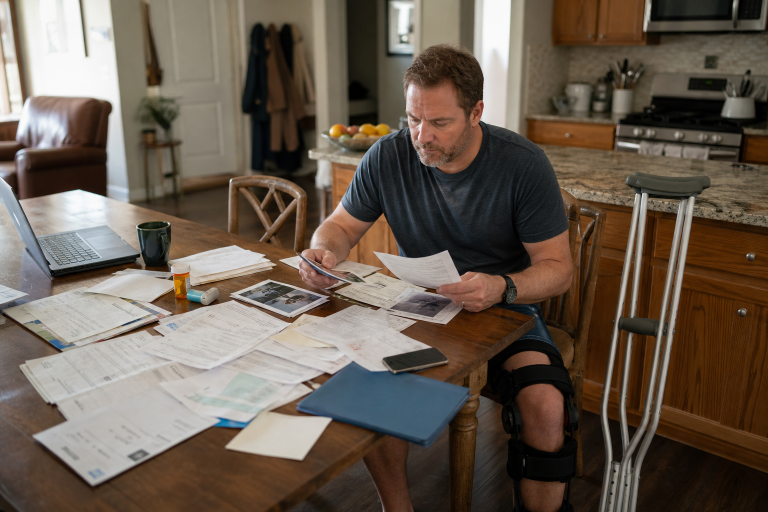
Medical treatment is primarily about health, but it also creates important records. Follow professional instructions, attend recommended appointments, and report any new or worsening symptoms to providers. Do not change treatment merely to make a claim appear stronger. Instead, be honest about symptoms, limitations, and progress.
What to Record Each Week
- Appointments, treatments, and medications.
- Symptoms that improved, remained, or worsened.
- Work hours, duties, or shifts missed.
- Tasks that became difficult, such as driving, lifting, childcare, or housekeeping.
- Help received from relatives, friends, or paid caregivers.
Count the Full Cost of an Injury
An injury may involve more than the first hospital bill. Depending on the facts, a claim may include direct financial losses and the ways an injury affects ordinary life. A broken wrist, for example, may lead to therapy, missed income, rides to appointments, medication expenses, and difficulty handling household or childcare responsibilities.
Possible Loss Categories
- Emergency care, follow-up visits, rehabilitation, and future treatment
- Prescription drugs, medical equipment, and travel to appointments
- Lost wages or reduced earning ability
- Household support and property damage
- Pain, discomfort, and limits on usual activities
How Insurance Conversations Can Affect a Claim
Insurance representatives may contact an injured person soon after an incident. Provide basic facts truthfully, but do not guess about fault, future recovery, or details you do not remember. Keep notes on every call, including the date, the representative, the claim number, and the requested documents. Basic guidance on what to do after an accident can help people organize early tasks.
Questions to Ask Before Responding
- Which claim does this request concern?
- What information or records are being requested?
- Does the request include medical authorizations or a recorded statement?
- What deadline applies, and can the request be provided in writing?
- Has a settlement offer been made?
Review Settlement Offers With Care
A settlement is often a final agreement. A quick payment may be tempting, especially when bills are arriving, but it may not cover future treatment, unpaid balances, ongoing symptoms, or lost income. Before signing, review whether the agreement releases all claims and addresses any known medical bills, liens, and other benefits.
When a Personal Injury Lawyer May Help
Some minor claims can be handled without a lawyer. Legal guidance may be useful when fault is disputed, injuries affect work or long-term health, multiple insurers are involved, or a business, employer, or government entity may be responsible. It can also be important when an insurer asks for broad medical records, offers a settlement before treatment is complete, or a filing deadline is near.
What Legal Help Usually Involves
A personal injury lawyer may gather records, identify potentially responsible parties, communicate with insurers, evaluate losses, negotiate, and file court documents if necessary. Hiring counsel does not guarantee a result or a larger recovery. During a consultation, ask about deadlines, important facts, records to collect, legal fees, case costs, settlement risks, and factors that could extend the case.
Common Mistakes to Avoid
- Waiting too long to seek appropriate medical care.
- Ignoring treatment instructions or missing follow-up appointments.
- Discarding damaged clothing, equipment, receipts, or records.
- Posting detailed comments about the incident on social media.
- Accepting payment without reading the release.
- Relying on memory instead of dated notes and organized documents.
Claim Deadlines and State Rules
Personal injury deadlines vary by state and by case type. Different rules may apply to claims involving private parties, employers, children, wrongful death, or government agencies. An insurance reporting deadline can differ from the deadline to file a lawsuit, and some claims require early notice. Check the law in the state where the incident occurred rather than relying on a general deadline found online.
Can a Claim Be Settled Without Going to Court?
Yes. Many injury disputes resolve through negotiation, but settlement is voluntary. If the parties cannot agree, a lawsuit may be necessary. Filing a lawsuit does not automatically mean a trial will occur, although it can add formal procedures, time, and expense.
Final Decision Checklist
- Has the injury been medically evaluated?
- Are records, bills, photos, and wage information organized?
- Is the fault accepted or disputed?
- Has any settlement release been reviewed carefully?
- Are notice or filing deadlines approaching?
- Would professional guidance reduce confusion or risk?
Conclusion
Careful records and calm decisions can make an injury claim easier to manage. Focus on recovery, preserve useful information early, and avoid making assumptions about fault, expenses, or future medical needs. The best path forward will depend on the evidence, the impact of the injury, available coverage, and the applicable state rules.

