


After a collision, safety and medical needs come first. Once everyone is safe, organized documentation can make it easier to explain what happened, track expenses, and respond to insurance requests. These steps to take after getting hurt in a car crash can help you prioritize the immediate aftermath while you begin preserving important information.
You do not need a complicated system or perfect records. The goal is to create a clear, dated account using photographs, reports, medical records, receipts, and notes. Keep facts separate from assumptions, and avoid guessing when you are unsure of a detail.
Why A Clear Record Matters
A crash can be stressful, and memories of timing, conversations, pain, and vehicle damage may become less precise over time. A timeline with dates helps turn a pile of files into a usable record. For example, photos of a damaged bumper are more helpful when they are paired with the towing date, repair estimate, and notes about what happened at the scene.
Documentation may support medical follow-up, insurance discussions, repair decisions, and your own understanding of events. Reporting requirements, insurance policy terms, and deadlines can vary by location and situation, so preserve records early rather than assuming you can recreate them later.
What To Record In The First Few Hours
Only collect information when it is safe to do so. Do not remain in traffic, delay emergency care, or put yourself at risk to take photographs. If possible, record these basics:
- The date, approximate time, exact location, weather, lighting, and road conditions.
- Names, contact details, insurance information, and vehicle details for involved drivers.
- Names and contact information for passengers and independent witnesses.
- The responding agency, officer name if provided, and report or incident number.
- Visible damage, vehicle positions, and symptoms you notice at the scene.
Save original photos and videos before cropping, annotating, or sharing copies. Originals may retain useful details such as the date and time they were created.
Photos, Video, And Digital Evidence
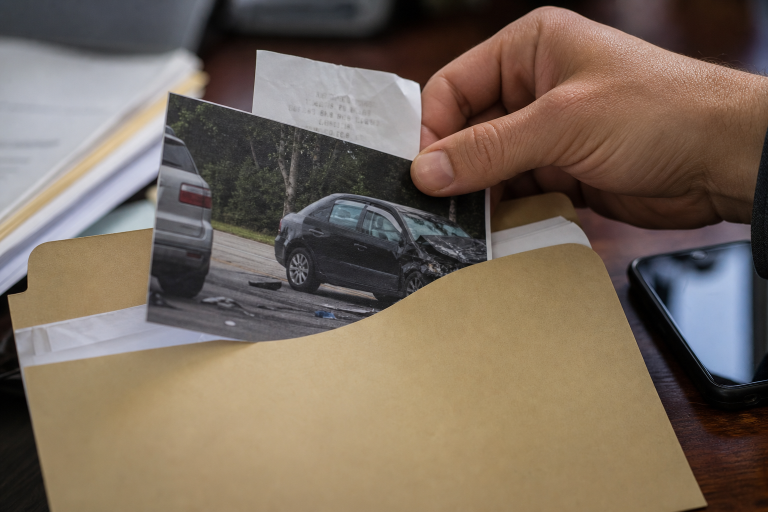
Take both wide and close views when conditions allow. Wide images can show the intersection, lanes, signs, traffic signals, debris, and road layout. Close images can document damage to each vehicle, license plates, broken parts, skid marks, and visible injuries when appropriate.
Short videos may help show lighting, sight lines, road conditions, or the overall scene. Photographs, measurements, video, and witness accounts are among the materials that can be considered in traffic collision reconstruction when a crash requires more detailed analysis.
Copy dashcam footage as soon as you can, especially if the device records over older files. Make a note of nearby businesses, apartments, traffic, or doorbell cameras, including the camera location and the person or organization that may control it. Keep the original file unchanged and avoid relying only on a compressed social-media upload.
If a child safety seat was in the vehicle, preserve related purchase and crash information and review the guidance on car seat use after a crash before deciding whether the seat should remain in service.
People, Witnesses, And Official Reports
Create one contact list for drivers, passengers, witnesses, police officers, tow operators, repair facilities, and medical providers. Next to each name, note when you contacted them and what they provided. Independent witnesses may have observed details that the drivers did not see, but they never pressure someone to alter or expand a statement.
Store report numbers in more than one secure location. An official report can be important, but it may not include every later development, such as medical symptoms, repair supplements, missed work, or out-of-pocket costs.
Symptoms And Medical Care
Keep a simple health timeline. Record appointment dates, symptoms, treatment instructions, prescriptions, referrals, and changes in daily activities. If a headache, stiffness, dizziness, or other symptom begins later, note when it started, how it changed, and what care you sought. Follow guidance from qualified medical professionals rather than trying to diagnose an injury yourself.
Keep visit summaries, bills, pharmacy receipts, and transportation records together. If you miss an appointment, record the date and reason. Consistent notes can help you remember the course of care without relying on memory alone.
Work, Repairs, And Other Expenses
Save documents that show the financial impact of the crash, including:
- Repair estimates, invoices, towing records, storage charges, and rental paperwork.
- Medical bills, prescription receipts, and mileage or transportation costs for appointments.
- Records of damaged personal items that were in the vehicle.
- Missed shifts, reduced hours, paid time off, and relevant employer communications.
A basic spreadsheet can list the date, item or service, amount, payment method, and receipt filename. Keep receipts even after an initial payment, because later questions may arise about the full amount of an expense.
Insurance Communication Log
For every call, email, letter, or portal message, record the date, time, claim number, representative’s name, and a neutral summary of the conversation. List documents requested, the delivery method, and any stated deadline. Save copies of forms and attachments before submitting them.
Read requests and settlement-related documents carefully. If you do not understand what a document asks you to confirm or sign, seek qualified advice before responding.
Common Documentation Mistakes
- Keeping every file on one phone without a backup.
- Using vague filenames such as “IMG_2048.”
- Posting detailed crash information publicly before the matter is resolved.
- Discarding receipts or repair paperwork too soon.
- Guessing about speed, distance, timing, or fault instead of identifying uncertainty.
- Waiting too long to ask about a video that may be overwritten.
A Simple File System
Create folders on a secure device or cloud drive: 01 Scene for photos and witness notes; 02 Reports for official documents; 03 Medical for care records; 04 Vehicle for repairs and towing; 05 Work for income-related records; 06 Insurance for claim communications; and 07 Timeline for a dated summary of major events. Back up files and leave original documents unchanged.
Common Questions
How Long Should Records Be Kept?
Keep them until medical care, repairs, insurance matters, and related disputes are fully resolved. The appropriate retention period can depend on the facts and applicable rules.
What If Evidence Is Missing?
Missing a photo, receipt, or witness contact does not make every other record worthless. Identify what is unavailable and do not fill gaps with assumptions.
Should Photos Be Edited?
You can make copies for easier viewing, but preserve the original files whenever possible.
What To Document After A Car Accident To Protect Your Claim
Good crash documentation is not about creating a flawless file. It is about preserving facts while they are still available. A dated timeline, labeled photos, complete receipts, medical notes, and calm communication records can make a difficult situation easier to manage.

