


Fetal Alcohol Spectrum Disorder (FASD) is a lifelong condition caused by prenatal alcohol exposure that affects brain development, physical growth, and behavioral and cognitive functioning. The disorder encompasses a range of neurodevelopmental challenges, including Fetal Alcohol Syndrome (FAS), partial FAS, alcohol-related neurodevelopmental disorder (ARND), and alcohol-related birth defects (ARBD). Discussions about FASD often arise in the context of celebrities and public figures, either through verified disclosure or advocacy campaigns. Understanding FASD through the lens of both medical research and lived experiences helps raise awareness, promote prevention, and reduce stigma. This article explores the medical, social, and cultural impact of FASD while highlighting notable advocates and their contributions.
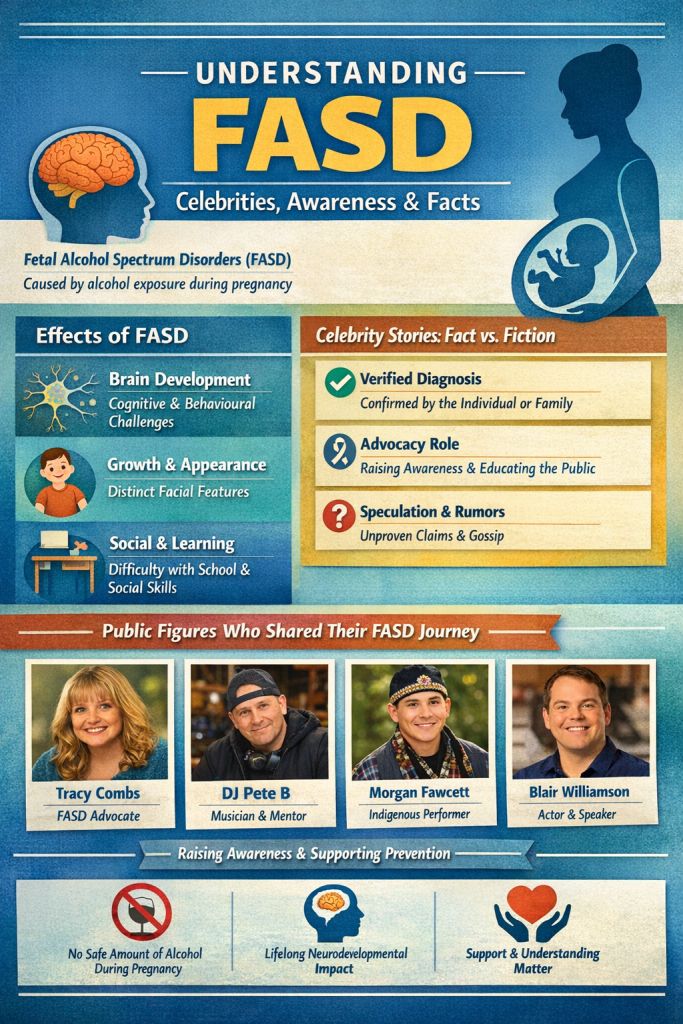
What Is FASD and Why Is It Often Discussed in Relation to Celebrities?
Definition of FASD
Fetal Alcohol Spectrum Disorder refers to conditions caused by alcohol consumption during pregnancy that disrupt fetal brain and organ development. The spectrum includes FAS, partial FAS, ARND, and ARBD. People with FASD may experience cognitive challenges, behavioral differences, and physical growth issues, making early diagnosis and intervention crucial. Understanding these conditions helps improve education, social support, and public awareness campaigns.
Spectrum Nature
FASD is a spectrum disorder, meaning its effects vary widely. Some individuals display noticeable facial features and severe neurodevelopmental challenges, while others show subtle cognitive and behavioral differences. Recognizing the spectrum nature ensures that interventions, therapy, and educational programs are personalized, increasing the likelihood of success for people with FASD.
Medical Classification
FASD is a neurodevelopmental disorder recognized by pediatric and neurological specialists. Diagnosis includes detailed history of prenatal alcohol exposure, cognitive assessments, and evaluation of behavioral and social challenges. Early recognition supports timely FASD therapy, educational accommodations, and social support.
How Does Prenatal Alcohol Exposure Affect Brain Development?
Neurological Impact
Alcohol exposure in utero interferes with neuron formation and synapse development, leading to lifelong cognitive challenges, including memory, attention, and problem-solving difficulties. Behavioral challenges like impulsivity and emotional dysregulation are also common. While neurological damage cannot be reversed, interventions such as therapy, occupational support, and educational strategies help individuals with FASD thrive.
Cognitive Functions
Individuals with FASD often experience difficulties in learning and executive functioning, including planning, organizing, and abstract thinking. These differences require specialized learning approaches and educational support to maximize academic achievement and personal development.
Behavioural Consequences
Behavioral symptoms of FASD include impulsivity, social misunderstandings, and difficulty regulating emotions. Understanding that these behaviors stem from brain development differences, not willful misconduct, is critical for parents, educators, and caregivers. Supportive interventions, social skills training, and therapy improve outcomes and foster independence.
Why Are Celebrities Associated With FASD in Public Discussions?
Media Speculation
Celebrities often attract public curiosity around their personal health or developmental history. Media outlets, social platforms, and fan forums sometimes speculate about conditions like FASD without medical confirmation. These unverified claims can distract from factual understanding and reinforce harmful stereotypes when presented without context.
Self‑Disclosure
Some public figures openly discuss their FASD diagnosis or related challenges, providing authenticity to awareness efforts. Their disclosures highlight real-life impacts on learning, social skills, cognitive function, and behavior, helping reduce stigma.
Advocacy and Awareness
Celebrities who become advocates for FASD help broaden public knowledge and influence policy, research funding, and community support programs. High‑profile engagement draws attention to prevention measures, such as abstaining from alcohol during pregnancy, and highlights the lived realities of those affected.
Are There Confirmed Celebrities With FASD?
Diagnosis Disclosure
Due to privacy and medical ethics, confirmed cases of public figures with FAS or FASD are limited. Verified disclosures are essential for accuracy speculation or assumptions based on facial features or behaviors should never be treated as medical fact.
Ethical Considerations
Discussing someone’s medical condition requires respect and consent. Articles or lists that attribute FASD to celebrities without evidence can harm reputations and perpetuate stigma. Ethical reporting focuses on stories shared by individuals themselves or their families for educational purposes.
Privacy
Many individuals, including well‑known personalities, may choose not to disclose personal health information publicly. Respecting privacy preserves dignity and ensures that discussion remains compassionate and informative rather than invasive.
Celebrities and Public Figures With FASD Awareness Stories
How to Understand Claims About Celebrities and FASD
Before exploring individual stories, it’s important to differentiate between:
- Verified Disclosure – A public figure or their family officially confirms a diagnosis and shares their experience.
- Advocacy Role – A public figure supports FASD education or research without personally having a diagnosis.
- Speculation or Misattribution – Claims without medical evidence should not be treated as fact and are excluded from this article to preserve accuracy and respect.
Tracy Combs – FAS Diagnosed Advocate
Tracy Combs, diagnosed with FAS at age two, is a global advocate for FASD awareness and research. Her MRI brain images show hallmark neurological patterns caused by prenatal alcohol exposure. Tracy participates in educational campaigns, medical conferences, and public awareness initiatives to inform families and clinicians about the long-term effects of FASD, including cognitive, behavioral, and social challenges.
Blair Williamson – Actor and Educator
Blair Williamson, born with FAS, uses acting and public speaking to discuss neurodevelopmental challenges, social skills, and learning differences. His story emphasizes how creative expression can provide an outlet for emotional regulation and advocacy, inspiring individuals with FASD to pursue their passions.
Liz Kulp – Author and Mentor
Liz Kulp co-authored The Best I Can Be, sharing her experience with FAS and associated learning, cognitive, and behavioral challenges. She travels to mentor teens with FASD, demonstrating the importance of education, early intervention, and community support in fostering independence.
Pete Bowers (DJ Pete B) – Music and Mentorship
British DJ Pete B publicly shared his FAS diagnosis, detailing struggles with school, social interactions, and impulse control. Music became a tool for self-expression, while mentorship programs allow him to educate youth about FASD, prevention, and resilience.
Morgan Fawcett – Cultural Educator and Performer
Diagnosed with FAS at birth, Morgan Fawcett tours with traditional North American Indigenous music while raising awareness about FASD. He emphasizes how early therapy, cultural engagement, and community support help individuals overcome learning, cognitive, and social challenges associated with FASD.
What Challenges Do Individuals With FASD Commonly Experience?
Learning Challenges
Individuals with FASD often face challenges in memory, attention, and information processing. Traditional classroom approaches may not align with their learning styles, requiring customized strategies and supportive educational environments. Early intervention enhances academic outcomes and fosters confidence.
Social Interaction Difficulties
Social cues, non‑verbal communication, and peer relationships may be challenging for people with FASD. Difficulties interpreting facial expressions or unwritten social rules can lead to misunderstandings and frustration. Social skills training and safe practice environments help build meaningful connections.
Emotional Regulation
People with FASD can experience strong emotions or mood swings. These differences arise from brain development patterns, not personal choice. Therapies like cognitive–behavioural techniques, routines, and emotional coaching contribute to improved coping strategies.
Can People With FASD Achieve Success in Public and Professional Life?
Strengths and Talents
Despite obstacles, many individuals with FASD display remarkable strengths, including creativity, curiosity, and resilience. By tapping into these qualities and finding supportive environments, individuals pursue fulfilling careers in arts, advocacy, education, and community leadership.
Support Systems
Family, mentors, educators, and healthcare professionals play a vital role in nurturing success. Consistent support structures from adaptive teaching methods to workplace accommodations help individuals navigate challenges and build independence.
Resilience
Many individuals with FASD exemplify resilience through their life journeys. Overcoming stigma, learning barriers, and emotional challenges demonstrates strength. Public stories of success encourage empathy and broaden societal understanding of what people with FASD can achieve.
What Are Common Misconceptions About FASD and Famous People?
Intelligence Myths
A pervasive misconception is that FASD equals low intelligence. In reality, cognitive profiles vary widely. Some people excel in specific skill areas despite neurodevelopmental obstacles. Highlighting real success stories challenges this stereotype.
Behavioural Stereotypes
Another myth is that behavioural differences are deliberate or controllable. Many behaviours associated with FASD stem from brain development nuances rather than personal intent. Public understanding of these neurological roots fosters compassion and better support.
How Has Celebrity Discussion Influenced FASD Awareness and Advocacy?
Media Impact
When celebrities and advocates share their experiences with FASD publicly, it increases visibility and educates broader audiences. Accurate reporting helps dispel myths and encourages conversations about prevention and support.
Policy and Research Awareness
High‑profile advocacy draws attention to public health initiatives, research funding, and early intervention programs. Celebrity engagement can motivate policymakers to prioritize education and resources that benefit individuals and families affected by FASD.
Public Education
Celebrity stories help inform audiences about the importance of avoiding alcohol during pregnancy and understanding neurodevelopmental differences. Such public discourse supports responsible health choices and encourages empathy in communities worldwide.
Conclusion
Fetal Alcohol Spectrum Disorders are complex neurodevelopmental conditions that can affect learning, behaviour, and physical development. Public interest in celebrities and FASD presents both challenges and opportunities. Ethical discussion, respect for privacy, and focus on verified narratives enhance understanding while combating misinformation. Real stories of individuals living with FAS or advocating for awareness underscore resilience, creativity, and the power of community support. By blending medical facts with personal insight, this article offers clarity on FASD’s impact and the importance of respectful, informed conversations.
FAQs
1. Can FASD be diagnosed in adults?
Yes. While most diagnoses occur in childhood, adults may be diagnosed through careful developmental history review, neuropsychological testing, and clinical evaluation. Adult diagnosis can guide tailored support and accommodations.
2. Are there confirmed celebrities with FASD?
Verified cases in the public domain are rare. This article focuses on individuals who have publicly shared their experiences for advocacy and awareness, not on rumours or speculation.
3. What causes FASD?
FASD is caused by alcohol exposure during pregnancy, which disrupts fetal brain and organ development. There is no known safe amount of alcohol during pregnancy.
4. Can people with FASD lead successful lives?
Yes. With early intervention, appropriate support, and compassionate environments, many individuals with FASD achieve personal, educational, and professional success.
5. How can the public help increase FASD awareness?
Education, respectful conversations, support for advocacy organizations, and promoting responsible alcohol use in pregnancy all contribute to greater awareness and prevention.
You may also want to read about Who is Dezi Freeman

