


Restaurants, bakeries, caterers, and institutional kitchens depend on more than strong recipes. They need dependable ingredients, clear supplier communication, and practical systems that hold up during busy service. Choosing the right food contract packaging approach can also support product protection, easier handling, and more reliable execution from delivery through final use.
Supply chain control does not require a complicated overhaul. It starts with identifying the products that matter most, setting expectations for suppliers, and giving employees simple steps for receiving, storing, documenting, and escalating when something looks wrong.
Why Consistency Matters In Foodservice
Consistency protects the guest experience and makes daily work easier for employees. When ingredients perform as expected, teams can produce more consistent flavor, texture, appearance, and portion sizes. Reliable products also simplify training because new employees can learn a single clear process rather than adapting to frequent variations.
For example, if a bakery receives a coating that spreads or sets differently from its usual product, decorating time, finished appearance, and waste can all change. Defining acceptable product performance helps managers notice issues before they affect an entire production run.
Common Supply Chain Risks
Strong kitchen procedures cannot fully prevent disruptions that begin before a shipment reaches the door. Common risks include shortages, unapproved substitutions, changed formulas, altered package sizes, damaged containers, missing lot details, and temperature concerns during transport. Depending on a single supplier for a critical product can increase exposure when availability changes.
The goal is not to assume every delivery will fail. It is to ensure the operation can quickly identify a problem, isolate the affected product, and communicate with the right people before service is disrupted.
How To Set Clear Supplier Standards
Supplier expectations work best when they are specific, measurable, and shared before an issue occurs. Begin by listing products that are essential to daily production, including ingredients, disposables, and packaging that directly affect safety or service.
- Define acceptable quality, delivery condition, labeling, package integrity, and storage requirements.
- Request current product specifications, ingredient statements, allergen information, and handling instructions.
- Require approval before a substitute is delivered for a critical item.
- Review recurring concerns with suppliers on a regular schedule.
A useful supplier review checklist asks: Was the correct item delivered? Was it properly labeled? Was packaging intact? Were dates and lot codes readable? Did the shipment arrive in usable condition? Were substitutions approved in advance?
Food Safety Records And Traceability
Accurate records help an operation respond more confidently to a product complaint, withdrawal, or recall. A receiving record should capture the delivery date, supplier, product name, quantity, lot or batch code when available, condition of the shipment, and the employee who accepted it. For products requiring temperature control, record the observed temperature and any corrective action taken.
The Food Traceability Rule describes recordkeeping tied to critical tracking events and key data elements for covered foods and businesses. Requirements vary, so each operation should confirm which rules, exemptions, and local requirements apply. Digital records can be especially useful when multiple locations share inventory, but records are only valuable if staff can retrieve them quickly.
Managing Ingredient Changes
A replacement item may affect more than cost. It can change allergens, cross-contact considerations, prep instructions, cooking time, storage needs, taste, texture, or final appearance. A fast response should still preserve food safety controls.
- Compare the original and replacement ingredient statements.
- Review allergen and supplier cross-contact information.
- Test the substitute in the actual recipe before broad use when practical.
- Update recipes, labels, prep instructions, and purchasing records.
- Tell culinary, purchasing, service, and quality personnel what changed.
Improving Receiving And Storage
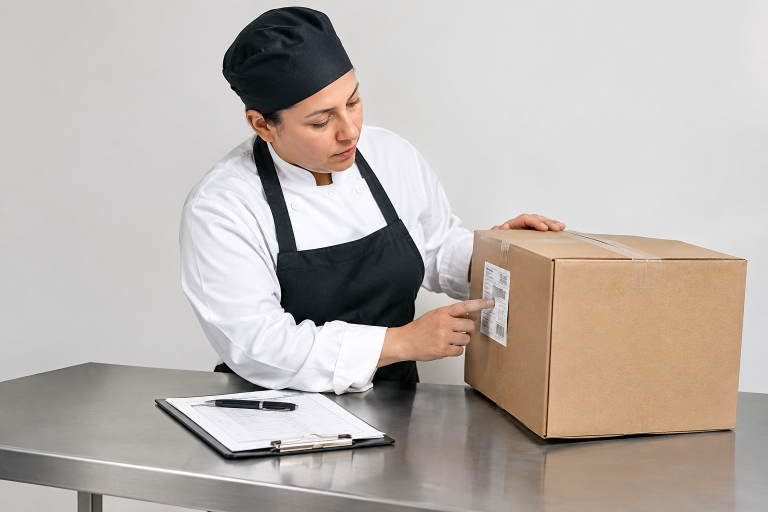
A five-minute receiving check can prevent a larger service problem later. If an employee notices broken seals, leaking containers, unclear labels, or questionable temperatures before items are shelved, the team can separate the product, contact the supplier, and avoid accidentally using it.
- Inspect containers for dents, leaks, broken seals, and other damage.
- Verify the product description, dates, and lot codes.
- Store items according to supplier instructions.
- Use first-expiring, first-out rotation where appropriate.
- Keep questionable products clearly separated until a manager reviews them.
The Role Of Packaging In Daily Operations
Packaging affects storage space, handling, portioning, labeling, transportation, and waste. The largest or lowest-priced format is not automatically the best choice if it is difficult to store, is repeatedly exposed during use, or is likely to be damaged during normal handling.
Choose formats that fit available shelving, make labels easy to read, and protect the product through normal kitchen activity. Track recurring packaging damage or unusable containers, as repeated patterns may indicate a delivery, storage, or handling issue that needs attention.
Using Data And Technology Wisely
Simple tools can improve visibility without forcing every operation to adopt complex software. Shared supplier scorecards, digital receiving logs, barcode or lot-code scanning, temperature monitoring, and low-stock alerts can all support better decisions. The best system is one employees understand and use consistently.
Training Teams For Better Execution
Employees need to know what to inspect, what to record, and who to contact when something is not right. Short procedures, real product examples, and photos of acceptable and unacceptable conditions make expectations easier to follow. Managers should also give staff permission to pause questionable deliveries rather than feeling pressured to accept them.
Food safety education that addresses recalls, supplier verification, and traceability can reinforce the importance of these everyday checks. The food safety updates on traceability and supplier verification from the University of Maine Cooperative Extension illustrate the value of timely information and practical controls across the supply chain.
A Simple 30-Day Action Plan
Days 1-7: Find The Gaps
- List critical ingredients and supplies.
- Review recent receiving, storage, and substitution problems.
- Identify missing supplier, lot, and allergen information.
Days 8-14: Set New Standards
- Create a basic receiving checklist.
- Define substitution approval steps.
- Set minimum documentation expectations for key suppliers.
Days 15-30: Train, Test, And Improve
- Practice delivery inspections and lot-code recording.
- Run a mock product-tracing exercise.
- Measure how quickly records can be located.
- Revise unclear steps based on employee feedback.
Final Takeaway
More consistent foodservice operations are built through connected, repeatable habits. Clear supplier standards, usable records, careful receiving, appropriate packaging, and confident employees reduce confusion before it becomes a costly problem. Start with the highest-risk gaps, build controls that fit the operation, and review them often enough to keep them useful.

