


Core Pillars of Digital Marketing for Service Contractors
Building a successful digital marketing strategy for service contractors in 2026 requires a robust foundation. We must move beyond simply having a website to establishing a multi-faceted online presence that captures customer attention at every stage of their buying journey. This involves strategically integrating local search visibility, search engine optimization (SEO), pay-per-click (PPC) advertising, and a strong multi-channel presence. Our goal is to shift from reactive marketing to a proactive system that consistently generates qualified leads. This systematic approach forms the bedrock of effective, data-driven digital marketing for service businesses, ensuring every effort contributes to measurable growth and improved entity optimization.
Dominating Local Map Packs and Organic Search
For service contractors, local search is paramount. When a homeowner needs a plumber, electrician, or roofer, their first action is almost always a local online search. Our strategy must ensure that your business appears prominently in these critical moments.
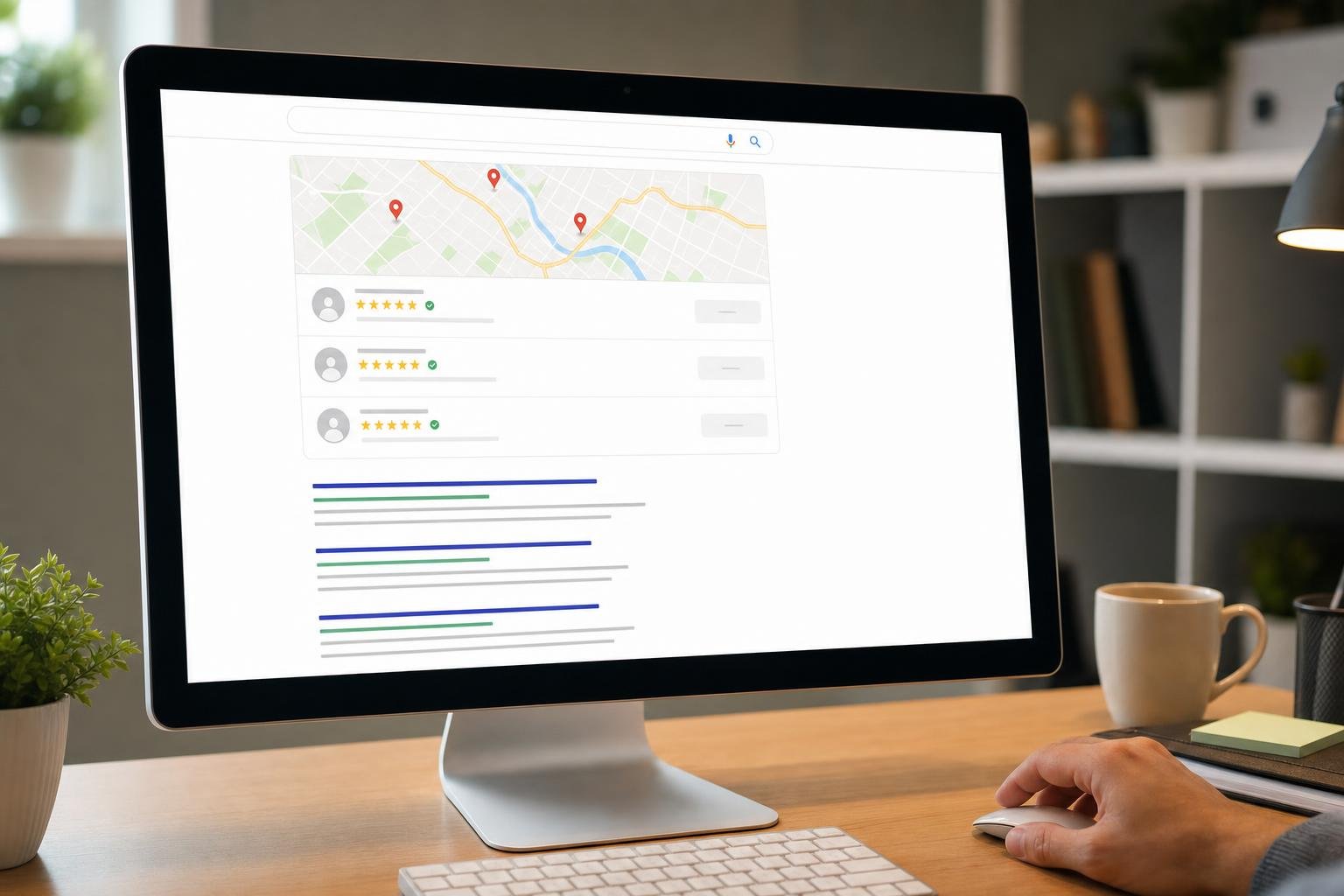
The Google Business Profile (GBP) is your digital storefront and the cornerstone of local SEO. Optimizing your GBP involves completing every field with accurate information, including services, hours, photos of your work, and consistent business details. Regularly posting updates, offers, and project photos keeps your profile active and engaging. The ultimate goal is to rank within the local map pack (or 3-pack), which appears at the top of local search results and captures a significant portion of clicks.
Beyond GBP, service area pages are crucial. These dedicated pages on your website should combine specific services with the cities or neighborhoods you serve. For instance, a page titled “HVAC Repair in [City Name]” or “Roof Replacement in [Neighborhood]” can significantly boost your relevance for those localized searches.
NAP (Name, Address, Phone Number) consistency across all online directories and your website is non-negotiable. Discrepancies can confuse search engines and dilute your local search authority. Implementing localized schema markup (structured data that tells search engines what your content means) on your website can further enhance your visibility by explicitly identifying your business type, services, and geographic reach.
Finally, review velocity is a powerful ranking factor. Consistently generating new, positive reviews on your GBP and other platforms signals to Google that your business is active, reputable, and trusted by customers. We should implement systems to systematically request reviews from satisfied clients.
Paid Advertising: Google Ads and Local Services Ads (LSAs)
While organic efforts build long-term authority, paid advertising offers immediate visibility and lead generation. Google provides two primary avenues for contractors: standard Google Ads (PPC) and Local Services Ads (LSAs).
Google Local Services Ads (LSAs) appear at the very top of search results, even above traditional PPC ads. They feature a Google Guaranteed badge, which builds immediate trust with potential customers by offering a money-back guarantee for work booked through the platform. LSAs operate on a pay-per-lead model, meaning you only pay when a qualified customer contacts you through the ad. This can be highly efficient for urgent services, as it filters out casual browsers. However, competition for LSA spots can be fierce, and careful management of your profile and reviews is essential for ranking.
Standard Google Ads (PPC) allows for more granular control over targeting and ad copy. We can target high-intent keyword targeting (e.g., “emergency plumber near me,” “roof replacement quote”) to reach customers actively searching for your services. Effective PPC campaigns rely heavily on negative keyword filtering to prevent your ads from showing for irrelevant searches (e.g., “DIY plumbing repair”). This ensures your budget is spent on genuinely interested prospects. Ad retargeting is another powerful tactic, allowing us to show ads to users who have previously visited your website but didn’t convert, keeping your brand top-of-mind.
Strategic Channel Comparison for Lead Acquisition
Choosing the right mix of marketing channels is critical for contractors. Each channel offers distinct advantages regarding customer acquisition cost, conversion speed, and long-term viability. Understanding these differences helps us build a balanced and effective strategy.
Feature Local SEO (Organic) Google PPC (Paid Search) Local Services Ads (LSAs) Customer Acquisition Builds over time, lower long-term cost Immediate, can be higher cost initially Immediate, pay-per-lead, often efficient Conversion Speed Slower to build, but high-quality, exclusive leads Fast lead generation, captures immediate demand Very fast, high-intent, verified leads Channel Longevity Sustainable, compounding asset, long-term ROI Stops when budget ends, continuous spending required Requires ongoing budget, but high trust from badge Trust Signals Authority from organic ranking, reviews, content Ad copy, extensions, website quality Google Guaranteed badge, customer reviews Control High control over content and website High control over keywords, bids, ad copy, landing pages Moderate control, Google manages lead quality Exclusivity Exclusive leads Exclusive leads Leads can be shared if multiple providers are contacted Effort/Maintenance Ongoing content, technical SEO, GBP management Daily monitoring, optimization, negative keywords Profile optimization, review management, lead disputes Conversion Infrastructure: Websites, Proof, and Lead Capture
Generating traffic to your website is only half the battle. The other, equally crucial half, is converting those visitors into actual leads and booked jobs. Your website and online presence must function as a high-performing sales tool, not just a digital brochure. This requires a focus on mobile responsiveness, speed, clear calls-to-action, and robust trust signals.
Structuring High-Converting Digital Marketing for Service Contractors
A contractor’s website needs to be built for conversion from the ground up. In August 2026, user expectations are higher than ever.
Firstly, mobile responsiveness is non-negotiable. Most local searches happen on mobile devices, so your site must look and function flawlessly on smartphones. Coupled with this is sub-two-second load speed. Even a one-second delay can significantly reduce conversions and increase bounce rates. Tools like Google PageSpeed Insights can help us identify and fix speed bottlenecks.
Click-to-call buttons should be prominently displayed in your header and throughout your site, especially on mobile. Visitors looking for urgent services need to contact you instantly. Conversion rate optimization (CRO) is an ongoing process of testing and refining elements on your site to maximize the percentage of visitors who complete a desired action (e.g., filling out a form, making a call).
Your website should immediately convey value and build customer trust signals. This includes displaying your licensing, insurance, certifications, and positive customer testimonials.
For lead capture, above-the-fold forms (visible without scrolling) are highly effective. These forms should be concise, asking only for essential information like name, phone, and email to reduce friction. Your clear value propositions should be evident throughout the site, explaining why customers should choose you over competitors.
To engage visitors and pre-qualify leads, consider interactive quote calculators or project estimators. These tools provide immediate value to the user and gather valuable data for your sales team. Finally, visual proof is paramount for contractors. Before-and-after galleries and video project walkthroughs vividly showcase your craftsmanship and build confidence in your work.

Reputation Management and the Contractor Proof Stack
Your reputation precedes you. Online reviews and testimonials are powerful social proof that directly influences lead generation and conversion rates. We must actively manage and cultivate your online reputation.
Automated review collection systems are essential. These systems can send automated SMS or email requests for reviews immediately after a job is completed, capturing feedback while the customer experience is fresh. SMS feedback triggers are particularly effective due to high open rates.
Once collected, testimonial syndication involves strategically placing these positive reviews across your website, Google Business Profile, social media, and other relevant platforms. This amplifies their impact and ensures your best feedback is widely seen.
Beyond reviews, your contractor proof stack includes visible indicators of your professionalism and credibility. This means prominently displaying your licensing information, insurance verification, and any relevant trade certifications on your website and marketing materials. This transparency builds brand authority and reassures potential clients that they are dealing with a legitimate and qualified professional. Responding thoughtfully to all reviews, both positive and negative, further demonstrates your commitment to customer satisfaction and strengthens your online reputation.
Navigating Emerging Channels: AI Search, Social Media, and Speed-to-Lead
The digital landscape is constantly evolving, with AI search and generative engines rapidly changing how customers find information. For contractors, staying ahead means adapting to these new realities while also leveraging established channels like social media and mastering the critical art of speed-to-lead.
Optimizing for AI Overviews and Generative Search Engines
As of August 2026, AI Overviews (formerly Google SGE) and generative search engines like ChatGPT and Perplexity are increasingly shaping how users get answers. These AI models often provide direct answers or recommendations, sometimes bypassing traditional “10 blue links” search results. For contractors, this means our goal isn’t just to rank high, but to be cited directly by these AI systems.
To achieve this, we need to focus on Generative Engine Optimization (GEO). This involves structuring your website content with clear, concise, and direct answers to common homeowner questions. Implementing an llms.txt integration (a file similar to robots.txt but for Large Language Models) can help guide AI crawlers to your most authoritative content.
We must ensure our content uses direct-answer formatting – providing immediate, factual responses to potential queries. This includes using FAQs, structured data (like FAQPage schema), and ensuring authoritative sourcing for any claims made on your site. When a homeowner asks ChatGPT for “best roofers in [city],” we want your business to be the one recommended, backed by clear, verifiable information on your site. Similarly, optimizing for Perplexity search citations means having well-structured content that Perplexity’s AI can easily summarize and reference.
Trade-Specific Social Media and Video Distribution
Social media is more than just a place to post photos; it’s a powerful platform for building community, showcasing expertise, and generating leads when used strategically. Different platforms yield different results for various contractor trades.
For residential contractors, Facebook community ads can target specific demographics (e.g., homeowners in a particular zip code interested in home improvement). Instagram project galleries are ideal for visual trades like remodelers, landscapers, and roofers, allowing them to showcase stunning before-and-after transformations. For commercial contractors or those seeking B2B opportunities, LinkedIn commercial outreach can be effective for networking and sharing project portfolios with property managers or general contractors.
Short-form video content and project time-lapses perform exceptionally well across all platforms (TikTok, Instagram Reels, YouTube Shorts). These engaging formats quickly demonstrate craftsmanship, problem-solving, and the transformation process, building trust and attracting attention. We advocate for an industry-specific digital marketing approach, tailoring content and platform choices to the unique needs and customer base of each trade, whether it’s HVAC, plumbing, electrical, or remodeling.
Lead Nurturing, Automated Follow-Up, and Call Tracking
The speed and quality of your lead response can make or break a conversion. In 2026, customers expect instant communication.
Our goal is to achieve a sub-two-minute response time for all inbound inquiries. Research consistently shows that responding within the first few minutes dramatically increases the likelihood of qualifying and converting a lead. This is where automated follow-up systems become invaluable.
If a call is missed, a missed-call text back system can instantly send an SMS to the caller, acknowledging their attempt to reach you and offering an alternative way to connect or promising a rapid callback. This prevents potential leads from immediately calling a competitor.
Dynamic call tracking is essential for understanding which marketing channels are generating the most valuable phone calls. By assigning unique, trackable phone numbers to different campaigns (e.g., Google Ads, website, GBP), we can accurately attribute leads to their source. This data allows for precise CSR performance auditing and coaching, ensuring your customer service representatives are effectively handling inbound calls and converting them into booked appointments. Integrating these systems with a robust contractor CRM dashboard provides a holistic view of your lead pipeline.
Marketing Execution by Trade Urgency and Budget Allocation
Effective digital marketing for service contractors is not a one-size-fits-all solution. Strategies must be tailored to the specific nature of the service offered, particularly its urgency, and a thoughtful approach to budget allocation is critical for maximizing marketing ROI and maintaining pipeline visibility.
Emergency vs. Planned Service Marketing Strategies
The intent behind a customer’s search significantly impacts the most effective marketing approach:
- Emergency Services (e.g., Plumbing, HVAC, Roofing for storm damage): For services like a burst pipe or a broken AC unit in July, customers need immediate solutions. Marketing for these trades focuses on capturing urgent, high-intent searches. This means heavy reliance on Google Local Services Ads and Google Ads with aggressive bidding for keywords like “24/7 plumber” or “emergency AC repair.” HVAC seasonality requires campaigns to ramp up before peak summer and winter months. Plumbing emergency intent demands 24/7 ad coverage and rapid response mechanisms. For roofing storm response, agile campaigns that target affected areas immediately after severe weather are crucial.
- Planned Services (e.g., Remodeling, New Installations, Routine Maintenance): For projects like a kitchen remodel or a new electrical panel, the customer journey is longer, involving research, comparison, and planning. Marketing here focuses on building trust, showcasing expertise, and nurturing leads over time. This involves strong organic SEO with detailed project galleries and blog content, social media for inspiration and community building, and retargeting campaigns. Electrical EV charger trends present an opportunity for planned installation services, requiring educational content and targeted ads. Home remodeling sales cycles can span weeks or months, necessitating robust lead nurturing via email and CRM systems.
- Seasonal Maintenance (e.g., Lawn Care, Gutter Cleaning, HVAC Tune-ups): These services have predictable peaks. Marketing should begin weeks, if not months, in advance of the season to capture early bookings and avoid peak-season ad cost spikes. Social media and email marketing are excellent for pre-booking campaigns.
Budget Allocation and Scaling Digital Marketing for Service Contractors
Determining how much to spend on digital marketing is a common question. While specific figures vary, industry benchmarks suggest that contractors typically allocate a percentage of their gross revenue to marketing, often ranging from 7% to 12%, with higher allocations for competitive markets or aggressive growth goals.
We recommend a tiered approach to tiered marketing budgets:
- Foundation Budget: Focuses on establishing core assets like an optimized Google Business Profile, a high-converting website, and initial local SEO efforts.
- Growth Budget: Adds paid advertising (LSAs and Google Ads) to generate immediate leads and expand reach.
- Market Leader Budget: Involves aggressive scaling across multiple channels, advanced content marketing, reputation management, and sophisticated analytics.
Our ultimate goal is to track cost per booked job, not just cost per lead. This requires integrating your marketing data with your sales and operational data. By systematically identifying and plugging conversion leak reduction points (e.g., slow response times, poor website UX), we can significantly improve your ROI. Focusing on customer lifetime value (CLV) means not just acquiring new customers, but nurturing existing ones for repeat business and referrals, further maximizing your marketing investment.
Frequently Asked Questions about Contractor Marketing
How much should service contractors spend on digital marketing monthly?
The ideal monthly digital marketing budget for service contractors varies significantly based on factors like market competitiveness, desired growth rate, and geographic reach. While we do not provide specific pricing, industry benchmarks often suggest allocating a percentage of annual gross revenue, typically ranging from 7% to 12%. Newer businesses or those in highly competitive markets might lean towards the higher end of this range to establish a foothold. This budget can be structured into foundation budgets for initial setup, scaling growth tiers for expansion, and adapted to the specific dynamics of the local market competition.
What is the difference between organic SEO and Google Local Services Ads?
Organic SEO (Search Engine Optimization) focuses on improving your website’s visibility and ranking in Google’s unpaid search results and the local map pack. It’s about building compounding organic assets like authoritative content, strong Google Business Profile presence, and positive reviews. The results take time to build (3-6 months for initial traction, 12-18 months for authority) but provide a sustainable, lower cost-per-lead over the long term.
Google Local Services Ads (LSAs), on the other hand, are paid ads that appear at the very top of Google search results, featuring a “Google Guaranteed” badge. They operate on a pay-per-lead structure, meaning you only pay when a qualified customer contacts you through the ad. LSAs offer immediate visibility and high-intent leads, with the added trust of Google’s backing. While they capture prime SERP real estate, they require continuous ad spend and adhere to Google’s strict Google Guaranteed verification process. Both are crucial for comprehensive online visibility.
How can contractors improve lead close rates from digital channels?
Improving lead close rates from digital channels involves a combination of speed, efficiency, and professionalism. Firstly, speed-to-lead automation is paramount. Implementing systems that allow you to respond to inquiries (calls, forms, chats) within minutes, not hours, dramatically increases your chances of connecting with and converting a prospect.
Secondly, leveraging CRM text responses and email automation for initial follow-up ensures no lead falls through the cracks. For phone calls, call recording analysis provides invaluable insights into how your customer service representatives (CSRs) handle inquiries, identify common objections, and areas for improvement. Regular CSR training based on these insights can significantly boost their effectiveness in converting leads into booked appointments. It’s about ensuring that once a lead is generated, your internal processes are optimized to nurture and close it.
Conclusion
The digital landscape of August 2026 demands more than just a passing presence for service contractors. Relying solely on traditional methods or fragmented online efforts is no longer sustainable. We have explored how building owned digital assets—a fast, mobile-friendly website, an optimized Google Business Profile, and valuable content—forms the bedrock of your online success.
By pursuing multi-surface search dominance, strategically combining local SEO, Google Ads, and Local Services Ads, you can capture customer attention across all critical touchpoints. This approach, coupled with a focus on reputation management, conversion-optimized infrastructure, and rapid lead response, transforms your marketing from an unpredictable expense into a reliable engine for growth.
The journey to digital mastery is ongoing, requiring continuous optimization and adaptation to new trends like AI search. However, by embracing these strategies, you can move beyond the feast-or-famine cycle, achieve long-term compounding growth, and secure predictable booked revenue that reflects the quality and dedication you bring to every job.

