


Why Restaurant Payroll Faces Extra Pressure
Restaurant payroll is rarely a basic calculation of hours times rate. A server may pick up a host shift, a bartender may cover another location, and a manager may approve a late clock-out after the week has closed. Tips, job codes, breaks, overtime, and last-minute schedule changes can all affect the same paycheck. Using restaurant tipping software can help bring tip information into a more consistent workflow, but it works best when the underlying records are accurate. Small errors multiply quickly in a restaurant setting. One missed punch can change regular hours, overtime eligibility, tip-pool shares, payroll taxes, and an employee’s confidence in the business. That is why payroll accuracy is not simply a payroll-day task. It is an operational discipline that begins when a shift is scheduled and continues until employees can review their final pay details.
Map Every Pay Input Before Payroll Runs
Before replacing software or redesigning procedures, list every source of pay data. A straightforward pay-flow map should identify where each item begins, who checks it, when it is approved, and how it reaches payroll. This exposes duplicate data entry, unclear ownership, and missing handoffs before they create a pay issue.
- Hours worked, breaks, and approved time edits
- Base wages, overtime, premiums, and multiple job rates
- Cash tips, card tips, pooled tips, and shared tips
- Taxes, deductions, reimbursements, benefits, and pay changes
Keep the map simple enough for a location manager to use. If a manager cannot explain where a card tip, missed punch, or rate change goes next, the process is too dependent on memory.
Create Clear Rules for Tips and Tip Pools
Written tip policies prevent many avoidable disputes. Explain who participates in a pool, how the pool is calculated, when money is distributed, how cash and card tips are recorded, and who may approve corrections. Employees should know whether a service charge is treated differently from a voluntary tip, rather than discovering the distinction on a pay stub. Federal requirements also matter. The Department of Labor explains that employer tip regulations address tip credits, tip pooling, recordkeeping, dual jobs, and overtime considerations. State and local rules may be more protective, so restaurant owners should confirm the requirements that apply to each operating location with a qualified advisor. A short daily comparison is often more effective than a major correction at the end of the month. Match POS tip totals, employee tip reports, and pool distributions while the shift details are still fresh.
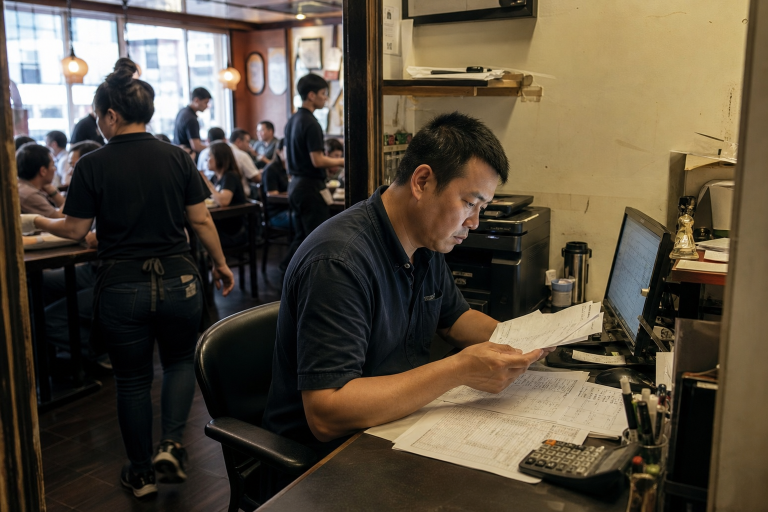
Make Timekeeping Easy for Hourly Teams
Timekeeping should be fast, clear, and consistent for employees who are moving between the dining room, bar, kitchen, and off-site work. Complicated rules invite workarounds, such as clocking into the wrong role or waiting days to report a missed punch.
- Use clear job codes for common roles and locations.
- Review missed punches and unusual edits every day.
- Ask employees to confirm edits that affect their time.
- Set a firm deadline for payroll corrections.
- Maintain an audit trail that shows who made and approved each change.
For example, a server who hosts twice a week may earn two different rates. Capturing the right code at clock-in is more reliable than reconstructing an entire week from schedules and text messages.
Check Overtime, Split Shifts, and Multiple Pay Rates
Overtime often occurs when an employee works in different positions, covers shifts at another location, or earns more than one hourly rate. Review how the payroll system combines those hours and calculates the regular rate. Do not assume that a familiar setup handles every exception correctly. Split shifts, long breaks, reporting-time pay, and premium-pay rules can vary by jurisdiction. Build a review step that flags these situations, and then apply the rules governing the employee’s actual work location.
Connect Payroll With Existing Tools
Restaurants commonly use separate platforms for scheduling, timekeeping, POS reporting, and payroll. When data moves through spreadsheets and email, it becomes difficult to trace an error or determine which version is correct. Prioritize connections that support multiple locations, job codes, tip reporting, overtime review, employee self-service, approval logs, and labor-versus-sales reporting. Integration is not a substitute for accountability. Assign an owner for each connection, document a backup procedure for failed imports, and test changes before a busy payroll week.
Build a Payroll Review Process
A repeatable review routine catches exceptions without forcing leaders to inspect every line manually. Use reports to focus attention on large changes, missing tips, unusual hours, and unexpected pay increases.
- Confirm that all locations submitted complete time records.
- Review missed punches, break exceptions, and manual edits.
- Compare POS tips with tip-pool and employee reporting records.
- Check overtime, rate changes, new hires, and terminations.
- Compare total labor cost with the prior pay period.
- Approve payroll only after exceptions have an explanation or correction.
Give Employees a Clear Pay Trail
Employees should be able to see their hours, rates, tips, deductions, and pay date without having to chase a manager for answers. A clear pay trail reduces confusion and makes it easier to correct an issue early. Establish one point of contact, a response timeline, and a documented resolution process for payroll questions.
Use a 2026 Restaurant Payroll Checklist
- Are all hours and edits approved by a manager?
- Are tips recorded and distributed under a written policy?
- Are overtime and multiple-rate calculations reviewed?
- Can every manual adjustment be traced and explained?
- Can employees access understandable pay information?
- Have state and local requirements been checked for each location?
For payroll tax procedures, IRS guidance on tip withholding and reporting explains employer responsibilities for reported tips and related records.
Keep Payroll Simple, Visible, and Reliable
Restaurant payroll does not need to feel fragile. Clean time records, clear tip policies, connected systems, and consistent reviews remove much of the friction. When employees receive accurate pay backed by records they understand, operators build trust while gaining a stronger foundation for staffing, budgeting, and sustainable growth.
Conclusion
A reliable restaurant payroll process starts with accurate time records, clear tip rules, and consistent reviews. Connecting scheduling, POS, timekeeping, and payroll systems can reduce repeated work and catch errors earlier. Managers should still review overtime, tips, deductions, and location-specific requirements before each pay run. Most importantly, employees should be able to understand how their pay was calculated and know where to raise questions. When payroll is accurate, visible, and consistently managed, restaurants can strengthen employee trust while gaining better control over labor costs and daily operations.

