


Choosing a binding style is about more than giving printed pages a finished appearance. The right format makes a document easier to read, carry, write in, store, and use repeatedly. For example, wire bound book printing can be a practical option when a workbook or manual needs to stay open on a desk while the reader follows instructions.
Start With The Reader
A training guide used at a workbench has different needs from an annual report displayed on a shelf. Before selecting a binding, consider where the document will be used, whether readers will take notes, how often pages will turn, and whether the piece must survive travel. A beautiful binding that makes pages difficult to hold open can frustrate readers and reduce the value of the content inside.
Think about the full experience. A cooking-class workbook should remain open while participants measure ingredients with both hands. An employee handbook may need a professional spine label for filing. A student workbook should leave room for writing and withstand backpacks, desks, and frequent page turning.
Match The Binding To The Document’s Job
Saddle Stitching For Short Booklets
Saddle stitching uses staples along the folded spine. It is a smart choice for short newsletters, event programs, promotional booklets, and simple guides. It is lightweight, economical, and easy to distribute. However, it is less suitable for thick documents or projects that require extensive note-taking near the center fold.
Perfect Binding For A Book-Like Finish
Perfect binding uses adhesive to create a clean, flat spine. It suits thicker reports, catalogs, handbooks, and paperback-style publications that need a polished appearance. This format stores neatly on shelves, but pages do not open as flat as coil or wire-bound pages. Allow extra inner margin near the spine so text and charts remain comfortable to read.
Spiral And Wire Binding For Active Use
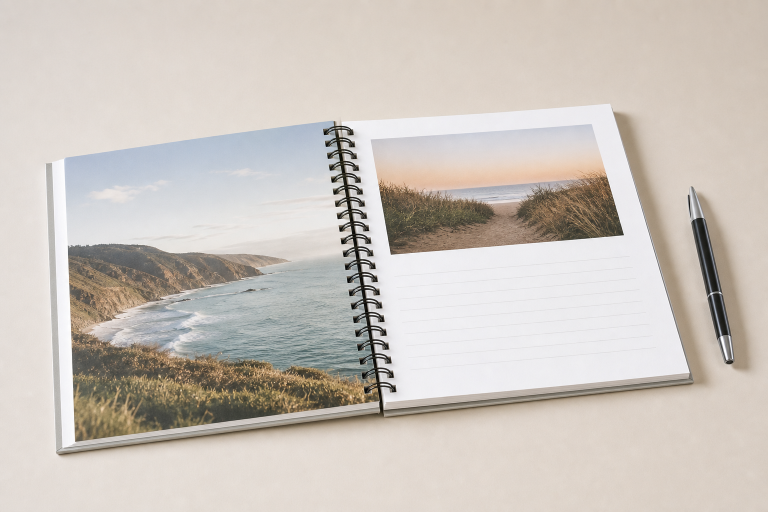
Spiral coils and twin-loop wire binding are strong choices for instruction guides, planners, field manuals, recipe books, and workbooks. Both styles can open flat, and many can fold back on themselves to save desk space. The basic principles of bookbinding show why construction affects usability: the connection between cover, pages, and spine determines how easily a publication opens and how well it withstands handling.
Hardcover Binding For Long-Term Value
Hardcover binding is best for premium publications, archival reference books, presentation pieces, and documents expected to receive years of use. It offers strong protection and a formal feel, although it usually costs more to produce and ship. It is most worthwhile when durability, shelf presence, and perceived value are central to the project.
Decide Whether Lay-Flat Use Matters
Lay-flat performance matters whenever readers must follow a page while completing another task. A technician checking a repair sequence, a student filling in exercises, or a chef reading a recipe benefits from pages that remain visible without being held down. Spiral and wire-bound formats are usually better for these situations than adhesive-bound books.
Not every document needs to lie flat. A report read from beginning to end can work well with perfect binding, while a short event program can be efficiently saddle-stitched. For more delicate books, readers should avoid forcing the spine open because careful handling helps reduce stress on the cover and pages.
Use Page Count As A Practical Filter
Page count quickly narrows the binding options. Very short documents may look awkward in a thick cover, while larger page counts may overwhelm staples or become difficult to turn with a lightweight coil. Count every interior page, including worksheets, inserts, blank note pages, title pages, and divider sheets, before making a final decision.
Finalize the page count before approving the binding. Late additions can change the thickness, affect the spine width, raise shipping costs, and make an originally suitable format less practical.
Pick Paper And Covers For Real-World Use
Uncoated paper is usually best for forms, worksheets, note pages, and classroom materials because it accepts pen and pencil marks easily. Coated paper can make photographs, product images, and color-heavy graphics appear sharper, but glossy surfaces may create glare in bright offices, classrooms, or workshops.
Paper thickness also matters. Heavier sheets feel substantial and can resist show-through, but they add bulk and weight. Lighter sheets reduce cost and make a document easier to carry, though they may be less durable. For covers, stronger stock offers better protection during transport and repeated handling. Matte finishes reduce glare, gloss makes images more vivid, and uncoated covers provide a writable surface.
Build A Print-Ready Layout
Leave generous space along the binding edge, especially for punched, coiled, or wire-bound documents. Keep important text, page numbers, charts, and images away from holes, staples, folds, and glued spines. Consistent headings, clear section breaks, readable type, and enough line spacing make a guide easier to scan during real use.
- Confirm the final trim size and page orientation.
- Identify the binding edge before placing content.
- Review every page at full size, not only on screen.
- Check bleed, image resolution, fonts, colors, captions, and page numbers.
- Request proof before placing a large order.
Consider Durability, Storage, And Budget
Documents used in the field, carried between meetings, or stored for years need stronger materials than one-time handouts. Moisture, heat, sunlight, dust, and rough handling can all shorten a book’s useful life. The Library of Congress offers practical guidance for preserving books during storage and handling, including ways to reduce unnecessary wear.
Do not judge value by upfront cost alone. A cheaper binding may lead to torn pages, reader frustration, or expensive reprints. When a manual will receive heavy use, produce a small test batch first. Compare physical samples for page turning, writing comfort, cover strength, and readability before committing to the final format.
Common Mistakes To Avoid
- Choosing a binding before defining the document’s purpose.
- Placing essential content too close to the binding edge.
- Using glossy paper where readers need to write notes.
- Forgetting the added thickness of covers, tabs, and inserts.
- Assuming every binding style works equally well at every page count.
- Skipping a final proofread and physical proof.
Make The Final Choice
Choose stapling for short, lightweight booklets. Choose perfect binding for thicker documents that need a clean book-style appearance. Choose spiral or wire binding when pages should open flat, fold back, or support frequent writing. Choose hardcover binding when long-term protection and formal presentation matter most. The best choice is the one that supports the reader’s real task from the first page to the last.

