


Winter comfort depends on more than having fuel in the tank. A dependable heating system, a well-sealed home, working safety devices, and a simple household plan can make the 2026 to 2027 heating season far less stressful. Homeowners who need dependable local support may also want to arrange diesel fuel service Raritan NJ, before cold weather makes scheduling more difficult.
The best time to find a weak thermostat, dirty filter, drafty room, or delivery-access issue is before the first hard freeze. A few practical checks now can help prevent uncomfortable mornings, urgent service calls, and avoidable fuel concerns later in the season.
Why Winter Preparation Should Start Early
Heating equipment works longer and harder once temperatures fall. Waiting until a cold snap arrives can mean competing for service appointments, clearing snow from a fill area at the last minute, or discovering that a minor issue has become a no-heat problem. Early preparation gives you time to make thoughtful decisions rather than rushed ones.
Check the Heating System Before Cold Weather
An annual appointment with a qualified heating technician is a smart starting point. During a seasonal inspection, the technician may review the burner, controls, filter, electrical connections, venting, thermostat operation, and visible signs of wear. This is also a good opportunity to ask whether the system is operating normally for its age and condition.
Suggested Inspection Checklist
- Test the thermostat and confirm that it responds correctly.
- Replace or clean filters according to the equipment manual.
- Inspect accessible flue and vent connections for visible damage.
- Note soot, unusual odors, fuel leaks, or loud new sounds.
- Keep radiators, baseboards, and supply registers free of furniture and rugs.
Leave burner repairs, fuel-line work, and combustion adjustments to trained professionals. Do not repeatedly reset a heating system if it fails to start, because a reset can mask a problem that needs service.
Monitor the Tank and Plan Fuel Use
Check the tank gauge regularly during periods of heavy use, ideally on the same day each week. Record the date, gauge level, and unusual weather conditions. These notes make it easier to spot consumption that seems faster than normal and help you estimate when to request a delivery. Fuel use varies widely with outdoor temperatures, home size, insulation, thermostat settings, and household routines, so no single gallon estimate fits every home.
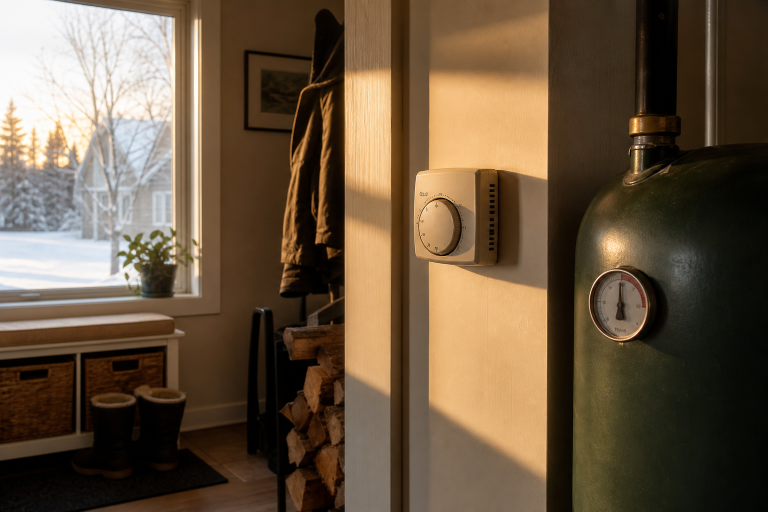
- Schedule deliveries before the tank is critically low.
- Keep the fill pipe and delivery route clear of vehicles, snow, ice, and stored items.
- Review prior winter records when planning your seasonal budget.
- Report an unexpected drop in the gauge level to a service professional.
For a broader background on heating oil and energy, the U.S. Energy Information Administration’s heating oil overview is a useful reference. Local delivery timing and pricing can differ from national trends, so use it as context rather than a personal fuel-use prediction.
Improve Heat Retention Around the Home
Weatherization helps the heat your system produces stay inside. Start with simple areas: worn weatherstripping around doors, drafts at windows, gaps around plumbing or utility penetrations, and cold air entering from an unfinished basement or attic. Open curtains on sunny days when practical, then close them at night to reduce the chill near windows.
If one bedroom stays colder than the rest of the house, do not assume the tank is the issue. Check whether a register is blocked, a damper is closed, furniture is covering a baseboard, or a window has a noticeable draft. A small insulation gap or air leak can make one room feel dramatically different from the rest of the home.
Review Carbon Monoxide and Fire Safety
Every home with fuel-burning equipment should have working smoke alarms and carbon monoxide alarms installed and maintained in accordance with the manufacturer’s instructions and applicable local requirements. Test alarms routinely, replace batteries when needed, and do not treat an alarm as a substitute for equipment maintenance. The EPA’s carbon monoxide safety guidance also recommends having fuel-burning appliances inspected by a trained professional at the beginning of each heating season.
Warning Signs to Take Seriously
- Headaches, dizziness, nausea, confusion, or unusual fatigue affecting people in the home.
- Soot near heating equipment, smoke, or unusual exhaust.
- A strong fuel odor indoors or signs of a visible leak.
- A carbon monoxide alarm is sounding or displaying a fault message.
If you suspect carbon monoxide exposure or a serious fuel leak, leave the area and contact emergency services or the appropriate qualified professional. Avoid flames, do not operate electrical switches, and do not try to locate a suspected leak yourself.
Prepare for Power Outages and Delivery Delays
Oil heat often still relies on electricity for controls, circulator pumps, blowers, ignition, or thermostats. Keep flashlights, batteries, blankets, medications, and charged phones accessible. During an extended outage, protect exposed pipes when it is safe to do so and follow local emergency guidance. Never use a grill, camp stove, or generator inside a home, garage, or enclosed area. Ask a qualified professional about safe backup-power options for your specific system.
Watch for Common Heating Problems
Call for service when the system runs but produces no heat, starts and stops repeatedly, heats rooms unevenly, makes grinding or banging sounds, smells like smoke or fuel, or uses fuel much faster than expected. A thermostat that does not match the room temperature can also signal a control, placement, or calibration issue.
Build a Simple Winter Maintenance Routine
Before Cold Weather
- Schedule service, test alarms, inspect drafts, and review fuel records.
During Winter
- Check the tank, keep delivery access and outdoor vents clear, and watch for new sounds or smells.
After Winter
- Record total fuel use, note repairs, inspect the tank area, and plan upgrades early.
Common Questions About Oil-Heated Homes
How Often Should an Oil Heating System Be Inspected?
Annual service is a common baseline, but the right schedule depends on the manufacturer’s guidance, equipment age, usage, and repair history.
How Low Should the Tank Get Before a Delivery?
Avoid waiting until the gauge is near empty. Your delivery schedule, tank size, and winter consumption should guide the timing.
Can a Homeowner Replace the Filter?
Some filters are intended for homeowner replacement, while others are part of professional service. Follow the equipment manual exactly.
Final Winter Checklist
- System inspected and thermostat tested.
- Filters, vents, and delivery access checked.
- Tank level tracked and delivery plan reviewed.
- Smoke and carbon monoxide alarms tested.
- Drafts, insulation gaps, and exposed pipes addressed.
- Emergency supplies and professional contact information are kept ready.
A comfortable winter begins with small checks completed before a problem appears. Consistent maintenance, sensible fuel planning, stronger heat retention, and reliable safety habits can help an oil-heated home stay warm and dependable throughout the season.

