


A short-term rental turnover is not simply a cleaning appointment. It is the operating process that takes a property from one guest’s departure to the next guest’s arrival, including cleaning, laundry, restocking, inspection, and issue reporting. Hosts who use a dependable vacation rental cleaning service can make this process easier to coordinate, but clear standards still matter whether the work is handled by a team, a contractor, or the host.
The goal is a guest-ready home every time, not a rushed reset that creates problems later. A missing towel, untested door code, overlooked stain, or empty soap dispenser can affect the first impression of an otherwise well-managed stay. A repeatable process gives everyone involved a clear view of what must happen and when.
Why Turnovers Matter More
Guest expectations begin before check-in. They are shaped by the condition of the entry, the smell of the home, the cleanliness of the bathroom, and whether essential items work as expected. Treating turnovers as a complete guest-readiness process helps prevent avoidable complaints, refund requests, emergency visits, and stressful messages on arrival day.
Cleaning should be thorough, but it should also be paired with practical checks. This includes looking for damage, removing forgotten items, confirming that supplies are available, and flagging maintenance concerns before they become the next guest’s problem.
Map The Full Turnover Process
Start with a simple timeline that runs from checkout to confirmed readiness. Every property should follow the same broad sequence:
- Confirm the departure and next arrival times.
- Review the available cleaning window and any special instructions.
- Assign the responsible person and prepare linens and supplies.
- Clean, reset, and restock the property.
- Inspect the completed work and test essential items.
- Report damage, missing items, low stock, or required repairs.
- Confirm that the property is ready for check-in.
Documenting these stages makes delays easier to identify. It also reduces the chance that a team member assumes someone else has checked the lockbox, started laundry, or replaced an important item.
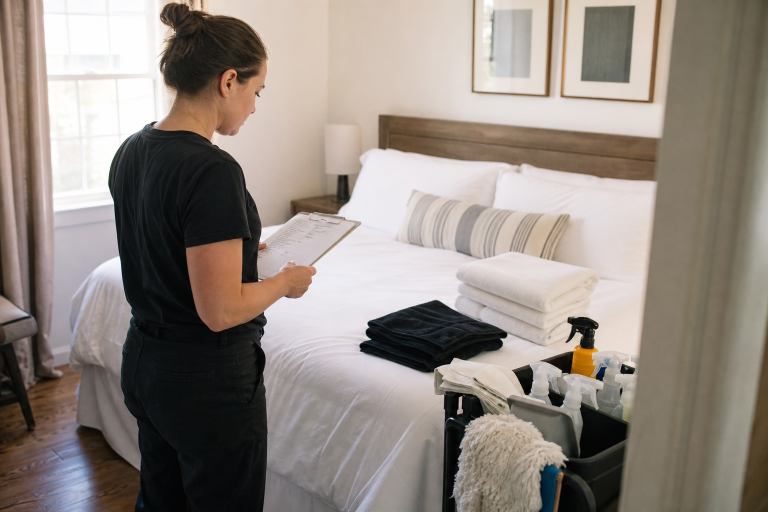
Create A Room-By-Room Checklist
A useful checklist is brief enough to follow under pressure and specific enough to avoid confusion. Make it property-specific, especially where a home has unusual appliances, multiple entrances, outdoor areas, or smart-home equipment.
Entry And Living Areas
- Check locks, keys, access codes, lights, remotes, and Wi-Fi details.
- Remove rubbish, dust visible surfaces, and clean floors and touchpoints.
- Check for guest belongings behind furniture, under cushions, and near charging points.
Kitchen, Bedrooms, And Bathrooms
- Clean appliances, worktops, dishes, cupboards, and bins.
- Fit fresh bed linen and inspect mattress protectors and blankets.
- Clean mirrors, sinks, toilets, showers, tubs, and floors.
- Check drains, water flow, towels, toiletries, and toilet paper.
Manage Same-Day Changeovers
Same-day turnovers need a realistic plan because there is little time to recover from traffic, late checkout, laundry delays, or a broken appliance. Keep spare linens and core supplies near the property, and maintain a backup contact for busy dates or unexpected absences.
In a three-hour turnover window, use the first 15 minutes for a quick inspection, rubbish removal, and laundry setup. Reserve the main block for cleaning and resetting each room. Keep the final 20 minutes for quality control, photos where helpful, and a final readiness update. Prioritize health, comfort, security, and first impressions if time becomes limited.
Set Clear Linen And Supply Standards
Minimum stock levels prevent last-minute shopping and reduce the risk of an incomplete reset. Set quantities based on the number of beds, guest capacity, booking frequency, laundry access, and delivery lead times.
- Sheets, pillowcases, mattress protectors, towels, hand towels, and bath mats.
- Toilet paper, tissues, bin liners, dishwashing products, and laundry products.
- Basic kitchen items, guest information materials, cleaning products, and protective equipment.
For cleaning products, follow the product label, including any stated contact time and safety directions. Hosts who need to compare suitable options can use the EPA’s disinfectant search tool when selecting registered products.
Build In Quality Control
Quality control should be a separate final step rather than the last few seconds before departure. Inspect what guests notice first: the entrance, floors, bathrooms, bedding, kitchen surfaces, and odor. Then test essentials such as heating or cooling, hot water, lighting, Wi-Fi, and access devices.
Look closely for hair, dust, stains, crumbs, forgotten belongings, and low supplies. When an issue could require follow-up, take a time-stamped photo and record it immediately. Cleaning and disinfecting are different tasks, and the CDC’s cleaning and disinfecting guidance reinforces the importance of using products as directed.
Improve Team Communication
Before every turnover, share the property address, access details, checkout and check-in times, expected scope, special requests, and known maintenance concerns. Afterward, require a concise completion update that includes the readiness status, photos or notes, low-stock alerts, missing items, and repair recommendations.
Use one agreed channel for these updates. Short, consistent messages are easier to review than instructions scattered across calls, texts, and several apps. Clear written records also make responsibility easier to track when a problem needs attention.
Track The Right Performance Measures
Measure reliability, not just speed. Useful indicators include:
- The percentage of turnovers completed on time.
- Guest comments related to cleanliness or preparation.
- Missed supplies, emergency callouts, and repeat maintenance issues.
- Average turnover time and repairs are identified before arrival.
The purpose is not to rush every clean. It is to produce consistent results with fewer surprises.
Avoid Common Turnover Mistakes
Common mistakes include using one checklist for every property, relying on verbal instructions, delaying supply checks until the end, skipping inspection, and having no backup plan. One overlooked detail can become a larger service problem. For example, a missing spare key may require urgent travel, delayed entry, and a frustrated guest, even when the rest of the property is spotless.
A Simple 30-Day Improvement Plan
Week One: Review
List every current turnover step, record delays and recurring complaints, and ask the people doing the work where instructions are unclear.
Week Two: Standardize
Create property-specific checklists, set minimum stock levels, and establish simple rules for reporting damage and maintenance issues.
Week Three: Test
Use the new process for several turnovers, track missed tasks and completion times, then remove steps that add effort without improving quality.
Week Four: Measure
Compare results with the first week, review guest feedback, keep the changes that work, and schedule a monthly process review. A reliable turnover system is built through small, consistent improvements rather than last-minute fixes.

