


Receiving an electric vehicle recall notice can be unsettling, particularly when it mentions a battery, charging system, or loss-of-power issue. Still, a recall is a call to take organized action, not a reason to guess. Owners researching Chevrolet Bolt known issues or concerns involving another EV should start by confirming the exact campaign tied to their own vehicle identification number.
The right response is usually straightforward: verify the recall, read the manufacturer’s interim instructions, arrange the repair, and keep clear records. This guide explains how to reduce risk while waiting, get useful answers from the service department, and respond if the problem persists after the recall work is completed.
Why Electric Vehicle Recalls Happen
A safety recall is different from routine maintenance, a warranty repair, or a service bulletin. Maintenance covers expected wear and scheduled care. Warranty repairs address covered defects on an individual vehicle. Service bulletins guide technicians through known conditions, but may not involve a safety-related defect. A recall, by contrast, addresses a safety issue or a failure to meet a required safety standard.
EV recalls can involve battery cells, battery-management software, charging equipment, braking controls, displays, power electronics, or wiring. A vehicle may remain drivable while a recall is open, but that does not mean the owner should ignore the notice. Use the VIN recall search to confirm whether the campaign applies and follow the specific instructions for that vehicle.
For example, a driver may see an occasional battery warning, assume it is minor, and later discover that a recall letter went to a prior address. Keeping registration details up to date and checking the VIN directly can prevent an important notice from being missed.
The First Steps After Receiving a Recall Notice
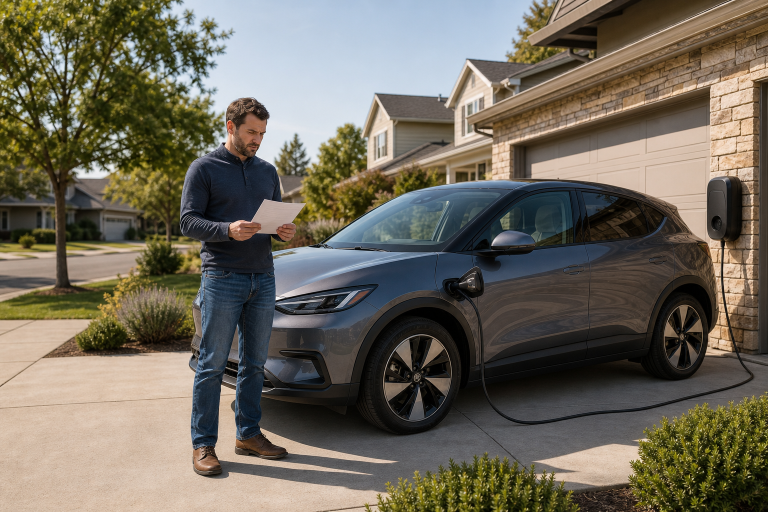
Replace panic with a short action plan. First, locate the 17-character VIN, usually visible through the lower windshield, on the registration or in the insurance documents. Then review the notice from beginning to end, including any advice about charging, parking, driving, or towing.
- Confirm the recall using the VIN and review the manufacturer’s owner portal for open campaigns.
- Call an authorized service center and ask whether the repair is available now or whether parts must be ordered.
- Ask whether the manufacturer has issued temporary operating instructions before the appointment.
- Save the recall notice, appointment confirmation, and all messages exchanged with the dealer.
Do not rely solely on social media posts, marketplace listings, dashboard messages, or a friend’s experience with the same model. A VIN search and the manufacturer’s written recall instructions offer a more reliable starting point.
Battery and Charging Safety While You Wait
Follow every temporary limit listed in the recall notice. That may include a recommended charging percentage, a request to avoid indoor parking, or a direction to park away from structures. Do not create your own charging rules unless they are supported by the owner’s manual or written manufacturer guidance. Broader EV battery recall safety guidance can also help owners understand why manufacturers sometimes issue interim precautions before a permanent repair is ready.
Take unusual symptoms seriously. Smoke, sparks, a strong chemical or burning odor, unexpected heat, repeated high-voltage alerts, sudden power loss, or a warning that tells the driver to stop are reasons to pull over safely when possible and contact roadside assistance. Never touch exposed orange high-voltage cables, damaged battery components, or liquid leaking from an underbody battery pack.
How to Build a Useful Service Record
Good documentation makes it easier to explain an ongoing problem, track repair attempts, support warranty inquiries, and show a future buyer how the vehicle was maintained. Keep all records in one digital folder, paper file, or both.
- Keep recall letters, repair orders, inspection reports, and invoices.
- Record dates, mileage, weather conditions, charging level, and the exact symptoms.
- Save photos or videos of warning messages, noises, charging failures, or unusual behavior.
- Keep tow bills, rental receipts, charging costs, emails, and text messages.
- Write down the name of each dealership, advisor, and repair facility involved.
A simple timeline is especially useful. “March 3, a warning appeared. March 5, the dealer inspected the vehicle. March 12, recall repair completed. March 15, warning returned.” Clear dates and mileage are often more useful than a stack of disconnected receipts.
What to Ask During the Repair Visit
Questions for the Service Advisor
- What is the official recall number for this repair?
- Will the vehicle receive an inspection, replacement part, software update, or more than one remedy?
- Are all the needed parts available, and how long should the work take?
- Will a follow-up inspection or software check be needed?
- What should the owner do if the same warning or symptom returns?
Before leaving, review the final repair order. It should identify the work performed, the mileage, the date, and any concerns the technician could not duplicate. If an issue remains unresolved, ask that the fact be stated in writing.
What to Check After the Recall Repair
Confirm that the recall shows as completed in the manufacturer’s system, then ask whether any charging, parking, or driving limits remain. Drive and charge the vehicle only as the service center recommends. Watch for recurring warnings, reduced performance, charging interruptions, or symptoms not present before the service visit.
A completed recall does not eliminate unrelated defects. Report a new or repeated problem promptly, and keep the completed repair order with the vehicle records. Quick reporting creates a clearer timeline if an additional diagnosis becomes necessary.
What to Do When Problems Continue
One unsuccessful visit is not always proof that a recall remedy failed. The issue may be intermittent, unrelated to the recall, or due to a new component failure. However, a repeating pattern deserves careful attention.
- Return to the service center with prior repair orders and symptom videos.
- Describe what happened, when it occurred, and what the vehicle displayed.
- Request a written diagnosis and ask whether a technical specialist can review the vehicle.
- Contact the manufacturer’s customer support channel if the issue remains unresolved.
- Review the warranty and applicable state consumer-protection rules.
Possible outcomes depend on the vehicle, repair history, warranty terms, purchase location, and applicable law. Avoid assuming that every repeated repair leads to the same remedy. Focus first on documenting the facts and obtaining a clear diagnosis.
Advice for Used EV Buyers
A lower price does not automatically make a used EV a good value. Before buying, run the VIN for open recalls, request proof of completed recall repairs, and review the remaining battery warranty. Ask for service invoices and have an EV-qualified technician inspect the vehicle when possible.
Check for warning lights, stored fault messages, collision or flood damage, underbody impacts, and signs that the vehicle sat unused for a long period. Be cautious if a seller will not provide the VIN, cannot explain the service history, or will not allow a charging test.
A Simple Owner Checklist
- Find the VIN and confirm the recall through an official source.
- Read all temporary safety instructions.
- Schedule recall service as soon as practical.
- Follow the charging and parking guidance while waiting.
- Save every notice, invoice, photo, and message.
- Confirm the repair was completed and ask about remaining restrictions.
- Report repeated symptoms in writing and keep a dated timeline.
Conclusion
An EV recall can feel complicated, but the owner’s next steps are manageable. Verify the campaign, follow official safety guidance, schedule the repair, and keep organized records. Direct questions and careful documentation can make the process safer, clearer, and easier to manage if concerns continue after the repair.

