


Delta Flight DL275 diverted to LAX became a widely discussed aviation event after a long-haul international journey was interrupted by a technical issue mid-flight. The aircraft, operating a trans-Pacific route, changed course and landed safely at Los Angeles International Airport as a precautionary measure. While unexpected, the diversion followed established aviation safety practices and demonstrated how airlines manage technical risks, passenger care, and operational complexity during long-range flights.

Overview of Delta Flight DL275
Delta Flight DL275 is a scheduled long-haul international service operated by Delta Air Lines. The route typically connects Detroit Metropolitan Wayne County Airport with Tokyo Haneda Airport, carrying a mix of business travelers, tourists, and international connections.
The flight is operated using the Airbus A350-900, a modern wide-body aircraft designed for ultra-long-range operations. Power is provided by Rolls-Royce Trent XWB engines, which are specifically engineered for efficiency and reliability on extended oceanic routes.
What Triggered Delta Flight DL275 Diverted to LAX?

The Delta Flight DL275 diverted to LAX was caused by a technical fault in the engine anti-ice system. This system plays a critical role during high-altitude flight, especially over polar and oceanic regions where extremely cold temperatures can lead to ice formation inside engine components.
During cruise, flight deck indications alerted the crew to an abnormal condition involving the anti-ice system. While the aircraft remained controllable and stable, continuing across remote regions without full system assurance would have increased operational risk. As a result, the crew elected to divert before entering deeper trans-Pacific airspace.
This decision aligned with airline procedures and regulatory expectations that prioritize early, conservative action over schedule continuity.
Understanding the Engine Anti-Ice System
Engine anti-ice systems prevent ice accumulation on engine inlets, nacelles, and sensors. Hot bleed air from compressor stages is routed to heat critical surfaces, ensuring smooth airflow and stable engine performance.
Failures can occur due to:
- Sensor irregularities
- Valve or duct malfunctions
- Software logic issues within engine control systems
Even with redundancy built into modern engines, any degradation in anti-ice protection requires immediate evaluation. When full redundancy cannot be confirmed, a precautionary diversion is the standard response.
Alerts and Indicators Pilots May Encounter
When such faults occur, pilots may observe:
- System warnings displayed on flight monitoring systems
- Abnormal engine performance data
- Anti-ice status inconsistencies between engines
These alerts prompt structured decision-making, ensuring the aircraft does not continue into regions where diversion options become limited.
Why Los Angeles International Airport Was Selected

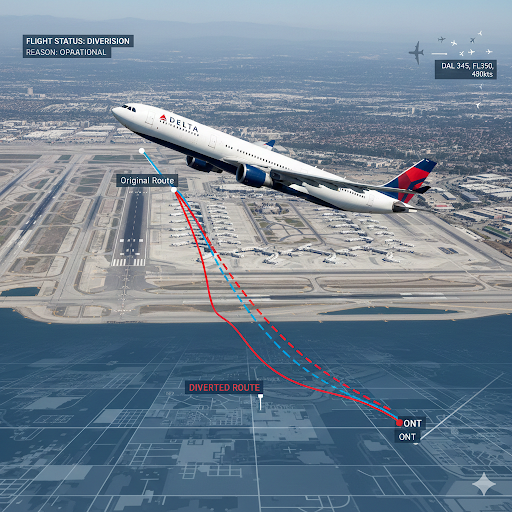
Why Delta Flight DL275 Diverted to LAX airport, Although other airports were geographically closer, Los Angeles International Airport offered the most comprehensive support for both aircraft maintenance and passenger handling.
Key reasons LAX was chosen include:
- Long runways suitable for wide-body aircraft
- Established Delta maintenance infrastructure
- Availability of engineers trained on A350 systems
- Full customs and immigration services for international arrivals
- Extensive ground handling and passenger accommodation capacity
Choosing a diversion airport is not simply about distance. The flight crew and airline operations teams consider runway length, weather conditions, maintenance capability, and the ability to support hundreds of international passengers. Los Angeles International Airport met all of these criteria.
LAX offers long runways suitable for large widebody aircraft, specialized maintenance resources for the Airbus A350, and established Delta ground operations. It also provides customs and immigration facilities, hotels, and transportation options that help reduce passenger disruption. Although other airports were geographically closer, Los Angeles presented the most complete operational solution.
Operational Handling of the Diversion
Once the fault was confirmed, the flight crew followed formal decision frameworks used across commercial aviation. Coordination took place between:
- The cockpit crew
- Airline operations control
- Air traffic control authorities
Fuel calculations were updated, alternate scenarios reviewed, and arrival planning completed before descent. The diversion was treated as a controlled operational reroute, not an emergency landing.
Fuel, Routing, and Air Traffic Coordination

During the diversion:
- Fuel reserves were verified to allow flexibility
- Air traffic control prioritized routing toward LAX
- Gate availability and ground teams were arranged in advance
This level of coordination ensured a smooth arrival without additional operational stress.
Passenger Experience During the Diversion of Flight DL275 to LAX
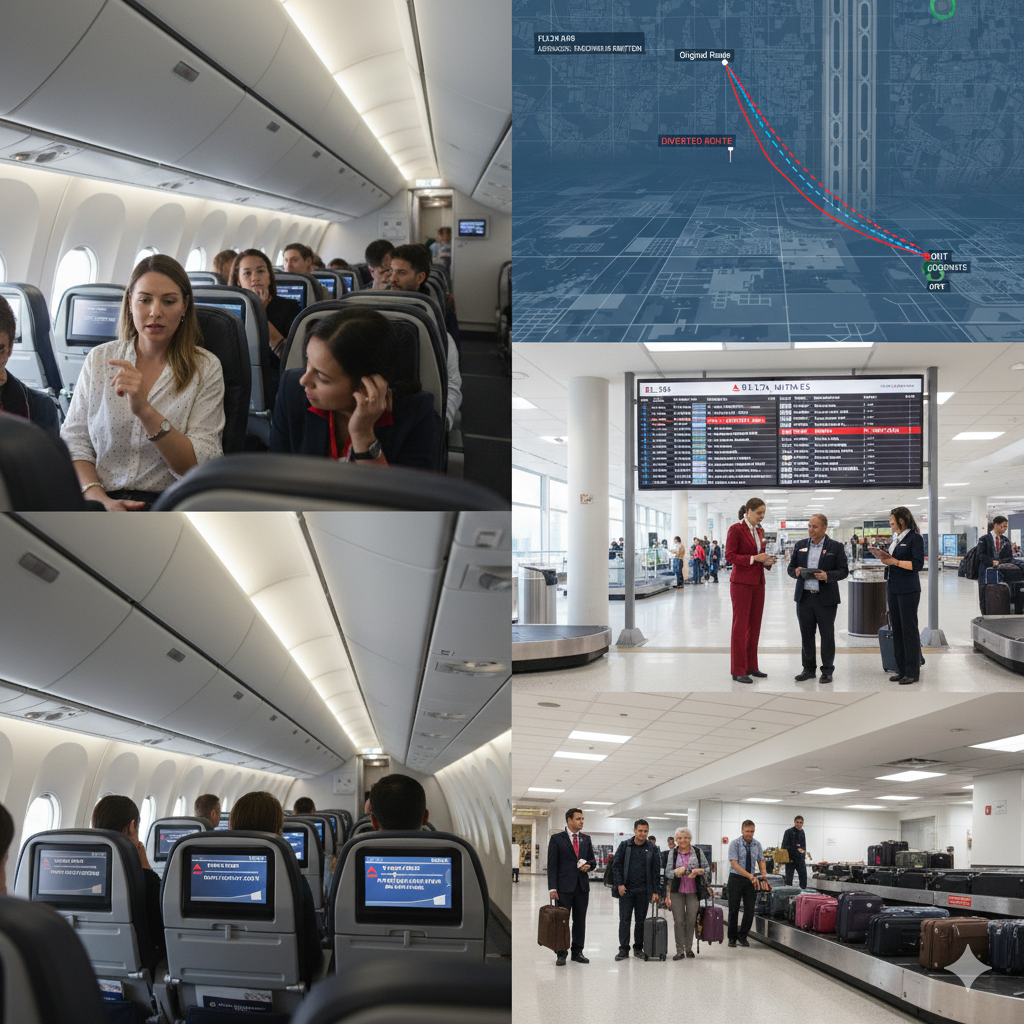
For passengers, the diversion introduced uncertainty and disruption. Cabin announcements informed travelers of the change in plans, while flight attendants maintained calm and order throughout the process.
Passenger reactions varied:
- Some experienced anxiety over the unexpected landing
- Others remained calm, trusting the crew’s professionalism
- A sense of shared experience developed within the cabin
Clear communication played a key role in maintaining confidence onboard.
Passenger Handling After Landing
After landing at LAX:
- Passengers disembarked normally
- Maintenance inspections began immediately
- Delta customer service teams assisted with rebooking
Depending on onward travel needs, passengers were reprojected on later flights to Tokyo or routed through alternate hubs. Hotel accommodations, meals, and ground transport were provided where required.
Delta Flight DL275 landed safely at Los Angeles without injuries or damage. Emergency services were present as a standard precaution, but no urgent intervention was required. After reaching the gate, passengers disembarked normally.
Delta’s customer service teams assisted travelers with rebooking, overnight accommodations when needed, meal vouchers, and onward travel arrangements. While delays and missed connections were unavoidable, the airline’s strong presence at LAX helped streamline passenger support.
Passenger Rights and Compensation Context
Because the flight originated in the United States, compensation obligations were governed by U.S. regulations rather than European passenger protection laws. While statutory compensation was limited, Delta’s conditions of carriage required rebooking and basic care.
Many passengers may also have relied on personal travel insurance or credit-card coverage for additional reimbursement.
Financial and Operational Impact on the Airline
A diversion of this scale creates both direct and indirect costs.
Direct Costs
- Additional fuel burn
- Landing and handling fees at LAX
- Unscheduled maintenance inspections
- Engineering labor and parts replacement
Indirect Costs
- Aircraft removed from scheduled rotation
- Crew duty extensions and reassignment
- Passenger rebooking on alternate flights
- Long-term impact on customer confidence
For wide-body aircraft like the A350, these costs can quickly escalate into six-figure amounts.
Maintenance and Technical Review
Following arrival:
- The aircraft was temporarily removed from service
- Engineers inspected the engine anti-ice system
- Onboard data was reviewed in detail
The investigation involved Delta maintenance teams, engine specialists, and regulatory oversight from bodies such as the Federal Aviation Administration. Aircraft clearance required full compliance with safety standards before return to service.
Prevention Through Predictive Maintenance
Modern aviation increasingly relies on predictive maintenance tools. Platforms analyze:
- Engine vibration
- Temperature trends
- Performance margins
By identifying anomalies early, airlines aim to address issues before they escalate into in-flight diversions. While no system can eliminate risk entirely, continuous monitoring significantly reduces disruption frequency.
Safety Rules Over Remote Routes
Flights crossing vast oceanic regions operate under ETOPS rules. These regulations limit how far aircraft may fly from suitable diversion airports.
The Delta Flight DL275 Diverted to LAX demonstrates how these standards function in real time, ensuring aircraft remain within safe reach of alternate airports when technical irregularities arise.
Lessons for the Aviation Industry
The DL275 incident reinforces several critical principles:
- Conservative decision-making protects lives
- Diversions are precautionary, not failures
- Passenger communication preserves trust
- Prepared airports and trained crews are essential
Rather than signaling weakness, such events highlight the resilience of modern aviation systems.
What Passengers Can Learn From DL275
Travelers can take reassurance from the fact that:
- Diversions are planned safety actions
- Crews are trained to detect issues early
- Aircraft systems are heavily monitored
- Safety always outweighs schedule pressure
Understanding this context can reduce anxiety during unexpected travel disruptions.
Frequently Asked Questions
Is a diversion the same as an emergency landing?
No. A diversion is a controlled, precautionary reroute. An emergency landing involves immediate danger.
Why was Delta Flight DL275 diverted to LAX instead of a closer airport?
LAX offered superior maintenance capability, long runways, and full passenger support services.
What aircraft was used on DL275?
The flight was operated using an Airbus A350-900.
Did the flight land safely?
Yes. The landing was smooth, and no injuries were reported.
Are diversions common on long-haul flights?
They are rare, especially on trans-Pacific routes, but remain a normal part of aviation safety planning.
Conclusion
The diversion of Delta Flight DL275 to LAX stands as a clear example of aviation safety in action. A technical irregularity in the engine anti-ice system prompted a well-executed, precautionary decision that prioritized passenger safety over operational convenience. While the diversion carried financial and logistical consequences, it reaffirmed the industry’s core principle: safety above all else.
For passengers, regulators, and airlines alike, DL275 is not merely a story of disruption—it is evidence of a system designed to manage risk, adapt quickly, and protect lives even at 35,000 feet.

