


Unexpected heating or cooling failures rarely happen without warning. Most HVAC systems don’t simply stop working overnight they decline quietly over time. What makes the difference between a sudden breakdown and years of reliable comfort is what happens behind the scenes. This is where experienced HVAC contractors play a critical role.
Professional contractors don’t just respond when a system fails. Their real value lies in prevention: identifying early warning signs, correcting small issues before they grow, and keeping every component working in balance. For homeowners and small business owners alike, this proactive approach helps ensure reliable climate control and operational continuity. This article explores, in detail, how HVAC contractors prevent unexpected system breakdowns and why their approach saves time, money, and stress in the long run.
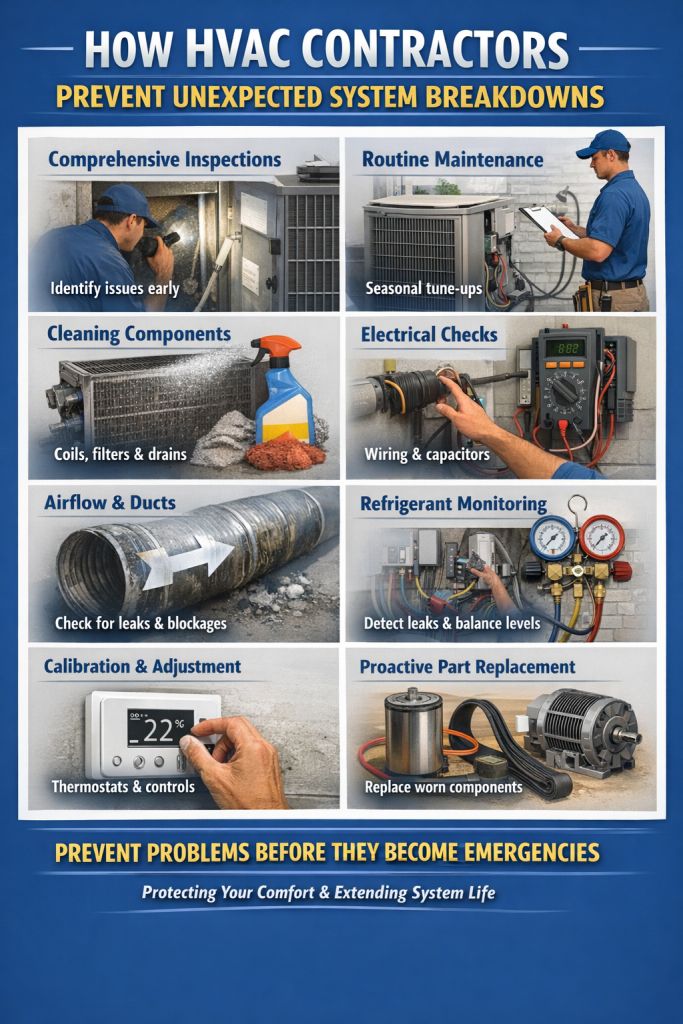
Understanding Why HVAC Systems Break Down Unexpectedly
To understand prevention, it helps to first understand failure. Heating and cooling systems are complex assemblies of mechanical, electrical, and airflow-related components. When one part struggles, others are forced to compensate, accelerating wear across the system.
Common reasons systems fail unexpectedly include:
- Gradual wear on moving parts
- Dirty or neglected components
- Electrical weaknesses
- Restricted airflow
- Refrigerant imbalances
- Poor system calibration
Most of these problems develop slowly. Without trained inspection, they often go unnoticed until the system can no longer compensate resulting in a sudden shutdown during the hottest or coldest days.
HVAC contractors focus on identifying these issues early, long before comfort is disrupted.
Comprehensive System Inspections: The Foundation of Prevention
One of the most effective tools HVAC contractors use is a thorough system inspection. These inspections go far beyond a quick glance at the equipment.
A professional inspection typically includes:
- Evaluating the condition of major components
- Listening for abnormal sounds during operation
- Checking temperature differences across the system
- Measuring airflow and pressure
- Inspecting visible wiring and connections
Small irregularities a faint vibration, a slight delay in startup, or uneven airflow often signal developing problems. Trained technicians recognize these signs immediately, while untrained observers may overlook them entirely.
Early detection allows contractors to address issues when they are still manageable and inexpensive to fix.
Preventive Maintenance and Seasonal Preparation
HVAC systems work hardest during extreme weather. Contractors plan preventive maintenance around these peak seasons to reduce the risk of failure when the system is under the greatest strain.
Before summer or winter arrives, contractors typically:
- Inspect cooling or heating components specific to the season
- Test system performance under load
- Identify parts nearing the end of their service life
- Ensure safety controls are functioning correctly
Seasonal preparation ensures that systems are not forced to operate with hidden weaknesses. This proactive approach dramatically reduces the chances of emergency breakdowns during high-demand periods.
Cleaning Critical Components to Prevent Hidden Damage
Dirt is one of the most underestimated causes of HVAC failure. Even a thin layer of dust can interfere with heat transfer, airflow, and electrical efficiency.
HVAC contractors regularly clean:
- Evaporator and condenser coils
- Blower assemblies
- Drain lines and pans
- Air filters and filter housings
When coils are dirty, the system must work harder to achieve the same level of heating or cooling. This extra strain increases energy use and accelerates wear on compressors, motors, and fans.
By keeping components clean, contractors help systems operate smoothly and avoid overheating or freezing issues that can cause sudden shutdowns.
Electrical Inspections That Prevent Sudden Shutdowns
Electrical issues are a common cause of unexpected HVAC failures. Loose connections, aging capacitors, and worn contactors can all lead to sudden loss of power or intermittent operation.
Professional contractors inspect and test:
- Electrical connections
- Capacitors and relays
- Contactors
- Control boards and safety switches
Many electrical components degrade gradually. A capacitor, for example, may still function but deliver insufficient power to motors. Contractors measure performance rather than waiting for total failure, allowing parts to be replaced before they cause system-wide issues.
This approach not only prevents breakdowns but also reduces the risk of electrical hazards.
Airflow Evaluation and Duct System Assessment
Proper airflow is essential for system reliability. Restricted airflow forces the system to operate under stress, leading to overheating, frozen coils, or premature component failure.
HVAC contractors evaluate airflow by:
- Checking blower performance
- Inspecting ducts for leaks or blockages
- Measuring pressure balance throughout the system
- Identifying poorly designed or damaged ductwork
Even minor airflow issues can have major consequences over time. By correcting airflow problems early, contractors ensure that heating and cooling equipment operates within safe limits, reducing long-term strain.
Refrigerant Monitoring and System Balance
Refrigerant plays a crucial role in cooling performance. Too much or too little refrigerant can damage the system, particularly the compressor.
Contractors monitor refrigerant levels and system balance by:
- Checking pressure readings
- Inspecting for leaks
- Ensuring proper heat exchange
A slow refrigerant leak may not cause immediate failure, but it forces the compressor to work harder over time. This extra workload shortens its lifespan and increases the risk of sudden breakdown.
By identifying and correcting refrigerant issues early, contractors protect one of the most expensive components in the system.
Calibration of Controls and Thermostats
Modern HVAC systems rely heavily on sensors and controls. When these components are out of calibration, the system may cycle incorrectly, run longer than necessary, or shut down unexpectedly.
HVAC contractors ensure:
- Thermostats are accurate
- Sensors respond correctly to temperature changes
- System controls communicate properly
Correct calibration allows the system to respond efficiently to indoor conditions, reducing unnecessary wear and preventing erratic behavior that could lead to failure.
Fine-Tuning System Performance
Beyond fixing problems, contractors focus on fine-tuning system performance. This involves adjusting settings and components to ensure the system operates as efficiently and smoothly as possible.
Fine-tuning may include:
- Adjusting fan speeds
- Balancing airflow between rooms
- Optimizing heating and cooling cycles
A well-balanced system experiences less stress during operation, which directly translates to fewer breakdowns and a longer service life.
Use of Professional Diagnostic Tools
Experienced HVAC contractors rely on specialized diagnostic equipment to uncover problems that are not visible to the naked eye.
These tools help technicians:
- Measure electrical performance accurately
- Detect airflow irregularities
- Monitor temperature changes in real time
- Identify hidden inefficiencies
Advanced diagnostics allow contractors to make informed decisions instead of guessing. This precision is a key factor in preventing unexpected failures.
Replacing Parts Before They Fail
One of the most valuable skills contractors develop is knowing when a component is nearing the end of its usable life. Rather than waiting for a complete failure, they recommend replacing parts proactively.
Common components replaced preventively include:
- Capacitors
- Belts
- Motors
- Electrical relays
Replacing a worn component early is far less disruptive than dealing with an emergency breakdown. This approach keeps systems running reliably and avoids collateral damage to other parts.
Drawing on Experience and Pattern Recognition
Experienced HVAC contractors recognize patterns that others may miss. They know which components fail first in certain system types, climates, or usage conditions.
This knowledge allows them to:
- Anticipate likely failure points
- Prioritize inspections effectively
- Make preventive recommendations based on real-world data
Experience-driven decision-making is a major reason professional maintenance is so effective at preventing breakdowns.
Educating Homeowners and Building Managers
Prevention doesn’t stop with the contractor. A significant part of avoiding unexpected system failures involves educating property owners about proper care and warning signs.
Contractors often advise clients to watch for:
- Unusual noises
- Inconsistent temperatures
- Rising energy bills
- Reduced airflow
They may also provide guidance on simple habits, such as regular filter changes and keeping vents clear. When users understand their system better, issues are reported earlier allowing for timely intervention.
Long-Term Benefits of Preventive HVAC Care
The cumulative impact of preventive care is significant. Systems that receive consistent professional attention tend to:
- Experience fewer emergency repairs
- Maintain stable indoor comfort
- Operate more quietly
- Last longer overall
Preventive care reduces stress on components, minimizes sudden failures, and provides peace of mind for homeowners and businesses alike.
Why Prevention Matters More Than Repairs
While repairs restore comfort after a failure, prevention preserves comfort continuously. HVAC contractors who focus on prevention help clients avoid the inconvenience, expense, and discomfort of unexpected breakdowns.
Their work may not always be visible, but its results are felt every day in reliable heating and cooling performance.
Final Thoughts
Unexpected HVAC breakdowns are rarely unavoidable. In most cases, they are the result of small, overlooked issues that gradually escalate. HVAC contractors prevent these failures through careful inspection, routine care, precise adjustments, and informed decision-making.
By addressing problems early and maintaining system balance, professional contractors keep heating and cooling systems running smoothly year after year. Their proactive approach doesn’t just prevent breakdowns—it protects comfort, investment, and peace of mind, which is especially important for companies focused on Choosing the Right Loan for business when planning long-term operational and maintenance costs.

