


A successful bathroom remodel begins with the problems you live with every day, not a rushed search for tile colors. Whether you need more usable storage, a shower that is easier to enter, or a better way to manage moisture, a written plan helps you prioritize the work that will make the biggest difference. Homeowners exploring a same day bathroom remodel can still benefit from defining their needs, measurements, and preferred features before making final decisions.
Good planning also reduces expensive changes after demolition begins. When you address layout, ventilation, lighting, safety, and budget before ordering materials, the finished bathroom is more likely to be comfortable, practical, and easier to maintain for years to come.
Start With The Problems You Need To Solve
Walk through the current bathroom and make a list of frustrations before choosing products. Focus on what slows down your routine, creates cleaning hassles, or makes the room feel unsafe. Separate the list into urgent repairs, useful upgrades, and style changes so cosmetic decisions do not distract from problems that need immediate attention.
- Identify cramped areas, blocked doors, and narrow walkways.
- Note where water collects, paint peels, or odors linger.
- Consider whether the lighting creates shadows in the mirror.
- List fixtures that leak, run poorly, or are difficult to use.
- Think about what could become harder to use within five to ten years.
Set A Realistic Project Scope
A surface refresh might include paint, new hardware, lighting, and accessories. A partial remodel may replace a vanity, flooring, or shower surround. A full renovation can involve demolition, plumbing and electrical changes, waterproofing, ventilation upgrades, and layout adjustments. Be clear about which level of work your bathroom actually needs.
Questions To Answer Before Requesting Estimates
- Will the existing layout stay in place?
- Do water lines, drains, or electrical outlets need to move?
- Are there signs of hidden water damage behind walls or beneath flooring?
- Can anyone use the bathroom while construction is underway?
- Which features are essential now, and which can wait?
Review The Layout Before Choosing Finishes
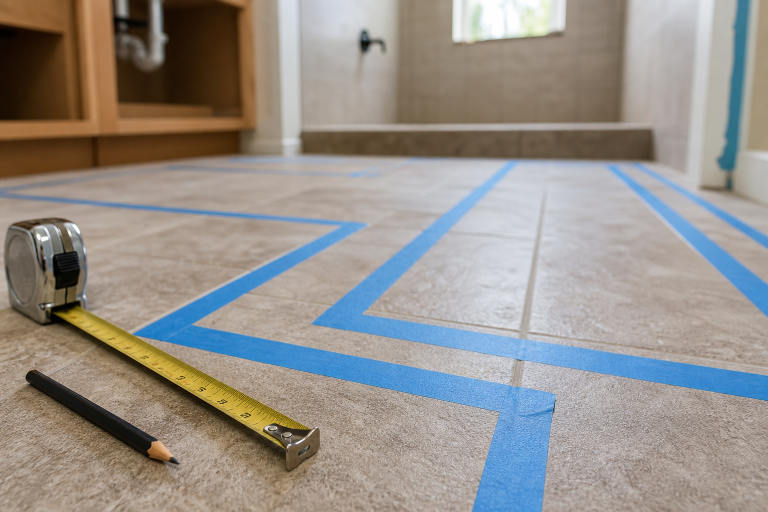
Beautiful finishes cannot correct a vanity drawer that hits the toilet or a shower entrance that feels restrictive. Confirm the footprint of every major fixture before selecting tile, paint, or decorative hardware. Use painter’s tape on the floor to outline a proposed vanity, toilet, shower, and door swing. This inexpensive exercise often exposes clearance problems before materials are ordered.
Check the entry path, walking space between fixtures, vanity depth, counter space, toilet knee room, shower opening, and access to shutoff valves. A slightly smaller vanity or a different door configuration can sometimes improve the room more than an expensive finish upgrade.
Plan For Moisture Control And Ventilation
Moisture management is one of the most important parts of a bathroom renovation because new finishes cannot solve a leak or recurring condensation problem. Before closing walls, repair damaged plumbing, inspect soft drywall or subflooring, and confirm that the exhaust fan works properly. The EPA recommends steps that keep bathroom exhaust fans venting outdoors rather than releasing humid air into an attic or another enclosed space.
- Ask how shower walls, pans, and seams will be waterproofed.
- Confirm the fan has a clear, properly routed path to the exterior.
- Seal accessible openings around pipes and wiring where appropriate.
- Address musty odors, peeling paint, and persistent condensation before refinishing.
Choose Surfaces That Suit Daily Use
Select materials based on water exposure, cleaning habits, comfort, and durability, not price alone. Large-format tile can reduce grout lines, while small tile offers more design flexibility but may require more grout maintenance. Solid wall panels provide fewer seams for cleaning. Porcelain flooring is durable and widely available, while natural stone can be attractive but often needs additional sealing and care.
Request samples whenever possible. A surface that looks warm under showroom lighting may look very different under daylight, ceiling fixtures, and vanity lights at home.
Add Safety And Long-Term Comfort
Safety features can fit naturally into a modern bathroom design. Textured flooring, a low-threshold shower, lever-style faucet handles, a handheld showerhead, and built-in seating can improve daily comfort without making the room feel clinical. If future support bars may be useful, ask the contractor to install solid blocking inside the walls during construction. Adding that support later usually requires opening finished walls.
Plan Storage And Lighting Together
Storage and lighting strongly affect how organized the bathroom feels each morning. Use drawers for smaller items, a medicine cabinet for frequently used products, recessed shower niches for bottles, hooks near the shower, and tall linen storage where space allows. Keeping everyday items off the counter makes even a compact bathroom feel less crowded.
Layered lighting works best: general lighting for the room, task lighting around the mirror, and low-level lighting for nighttime use. Choose bulbs with a consistent color tone so skin tones, paint, and finishes appear balanced throughout the space.
Build A Clear Budget
A practical budget includes more than fixtures and finish materials. Account for labor, permits, demolition, disposal, delivery fees, repairs, and contingency funds for conditions uncovered after demolition. Organize spending into required work, core finishes, comfort upgrades, and a reserve for surprises. Itemized estimates make it easier to compare what each contractor is actually providing.
Compare Contractors With Care
Do not judge proposals by the lowest total alone. Request more than one written estimate, verify local licensing and insurance requirements, ask who handles permits, and confirm how change orders will be documented and priced. A clear schedule should identify major milestones, material responsibilities, work hours, cleanup expectations, and warranty terms.
Vague estimates can create problems because they may not identify labor, materials, allowances, exclusions, or disposal costs. Homeowners can strengthen early conversations by defining project goals and access needs early, especially when the bathroom must remain functional for part of the project.
Use A Final Pre-Construction Checklist
- Approve the final layout and fixture locations.
- Check door, drawer, toilet, and shower clearances.
- Confirm the ventilation and waterproofing plan.
- Mark lighting, switch, outlet, and storage locations.
- Verify material orders, permits, payment terms, and work hours.
- Arrange for temporary bathroom access if needed.
- Photograph plumbing, wiring, and framing before walls are closed.
Conclusion
A bathroom remodel becomes more manageable when planning comes before shopping. Solve layout and moisture issues first, then choose materials, storage, lighting, and comfort upgrades that support the way the room is used every day. A thoughtful plan helps prevent avoidable surprises, supports clearer contractor conversations, and creates a bathroom that looks good while working better for the people who use it.

